
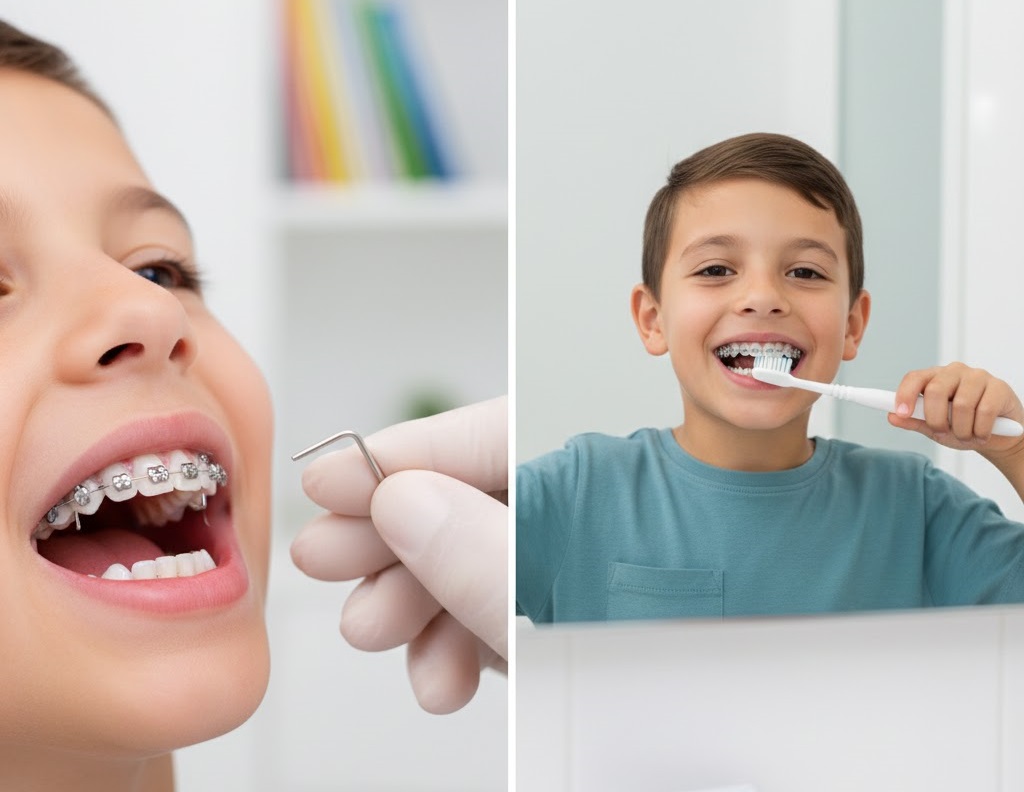
As children grow, their jaws and teeth develop rapidly. Sometimes the upper jaw does not widen at the same pace as the rest of the face, which can lead to crowding, bite problems, and difficulty with proper tooth eruption. A palatal expander is an orthodontic appliance designed to gently widen the upper jaw while a child is still growing.
For families in East Tennessee, understanding how palatal expanders work and how to care for them can ease concerns and help children achieve healthier, more balanced smiles. This guide explains why expanders are used, when they are recommended, what daily life with an expander looks like, and how proper care supports successful treatment.
What Is a Palatal Expander
A palatal expander is an orthodontic appliance that fits across the roof of the mouth and attaches to the upper teeth. Its purpose is to gradually widen the upper jaw so that the teeth have enough space to align properly and the bite can function correctly.
The upper jaw consists of two halves joined by a growth center called the midpalatal suture. In children and younger adolescents, this suture is still flexible. Palatal expanders take advantage of this natural growth window, allowing orthodontists to guide jaw development in a controlled and healthy way.
Parents interested in learning about orthodontic appliances for children can explore Orthodontic Services for a broader overview.
Why Palatal Expansion Is Used in Growing Children
Palatal expansion is most effective while a child is still growing. Once growth slows or the suture fuses, widening the upper jaw becomes much more difficult and may require surgical intervention.
Orthodontists recommend palatal expanders when they identify:
- A narrow upper jaw
- Crossbite where upper teeth bite inside lower teeth
- Severe crowding
- Impacted or blocked permanent teeth
- Breathing concerns related to narrow arches
Early expansion can create space, improve bite alignment, and support proper facial development.
How Palatal Expanders Work
Palatal expanders apply gentle pressure to the upper jaw over time. This pressure stimulates bone remodeling at the growth center of the palate.
Most expanders include a small screw in the center. Parents or caregivers are instructed to turn this screw on a specific schedule, usually once per day or as directed by the orthodontist. Each turn applies a tiny amount of pressure, gradually widening the jaw.
The process is slow and controlled, allowing the body to adapt naturally without trauma.
Types of Palatal Expanders
Several types of palatal expanders are used depending on a child’s needs.
Fixed Palatal Expanders
These are cemented to the upper teeth and cannot be removed by the child. Fixed expanders are commonly used for younger patients because they ensure consistent treatment.
Removable Expanders
In some cases, removable expanders may be used. These require excellent compliance and are less common for younger children.
Rapid Versus Slow Expansion
Orthodontists may recommend rapid or slow expansion depending on the treatment goals. Both approaches widen the jaw, but the activation schedule differs.
Your orthodontist will recommend the most appropriate type based on your child’s age, development, and orthodontic needs.
What Children Experience During Palatal Expansion
Parents often worry about discomfort, but most children tolerate palatal expanders very well.
Sensations During Activation
When the expander is turned, children may feel pressure across the roof of the mouth or around the nose for a few minutes. This sensation usually fades quickly.
Temporary Changes
Some children notice:
- A temporary gap between the front teeth
- Mild speech changes
- Increased saliva during the first few days
These changes are normal and typically resolve as the mouth adjusts.
How Long Palatal Expanders Are Worn
The active expansion phase usually lasts a few weeks. Once the desired width is achieved, the expander remains in place for several months to allow new bone to stabilize.
Although the expander is no longer being turned during this phase, it continues to play an important role in maintaining the new jaw width. Removing the appliance too early can allow the jaw to narrow again.
Daily Care and Cleaning of Palatal Expanders
Good oral hygiene is essential during palatal expansion. Food and plaque can collect around the appliance if not cleaned properly.
Cleaning Tips for Children and Parents
- Brush carefully around the expander after every meal
- Use a soft toothbrush to clean the roof of the mouth and appliance
- Rinse with water after eating if brushing is not immediately possible
- Avoid sticky foods that can lodge in the appliance
Helpful hygiene tips that apply to orthodontic appliances can be found on Life With Braces.
Foods to Avoid With a Palatal Expander
Certain foods increase the risk of damaging or clogging an expander. Parents should help children avoid:
- Sticky candies such as caramel or gum
- Hard foods like nuts or ice
- Chewy snacks that can pull on the appliance
Encouraging softer foods and cutting food into smaller pieces helps protect the expander and keeps treatment on track.
Speech and Eating Adjustments
It is common for children to experience temporary speech changes when they first receive an expander. The tongue needs time to adjust to the new appliance.
Encouraging children to speak, read aloud, and practice normal conversation helps speech return to normal more quickly. Eating may also feel different at first, but most children adapt within a few days.
The Role of Parents in Successful Expansion
Parents play a key role in palatal expander success. This includes:
- Performing screw turns exactly as instructed
- Monitoring oral hygiene
- Encouraging children to avoid restricted foods
- Attending follow up appointments
Consistency ensures that expansion occurs safely and efficiently.
How Palatal Expansion Supports Future Orthodontic Treatment
Palatal expansion often makes future orthodontic treatment easier and more predictable. By creating space early, orthodontists can:
- Reduce crowding
- Improve bite alignment
- Lower the likelihood of tooth extractions
- Shorten later treatment time
Expansion is often part of a broader interceptive orthodontic plan. Parents can learn more about early orthodontic approaches under Orthodontic Services.
Palatal Expanders and Breathing
A narrow upper jaw may contribute to mouth breathing or airway concerns. In some children, expansion increases nasal space, which may support healthier breathing patterns.
While palatal expanders are not a treatment for sleep disorders, orthodontists consider airway health when evaluating growing children.
What Happens After the Expander Is Removed
Once the expander has done its job and the bone has stabilized, it is removed by the orthodontist. Removal is quick and painless.
After removal, children may transition into:
- Monitoring
- Partial braces
- Full orthodontic treatment at a later stage
The next steps depend on the child’s development and treatment goals.
Common Concerns Parents Have
Parents often ask whether palatal expansion is safe. When performed at the right age and monitored properly, palatal expansion is a well established and safe orthodontic procedure.
Orthodontists carefully evaluate growth patterns before recommending expansion to ensure the best possible outcome.
Why Early Evaluation Matters for Palatal Expansion
Timing is critical for palatal expanders. Early orthodontic evaluation allows orthodontists to determine whether expansion is needed and when it should be performed.
Practices that emphasize individualized care and advanced diagnostics help ensure accurate treatment recommendations. Parents interested in learning more about treatment philosophy can visit What Sets Us Apart.
Palatal Expansion for East Tennessee Families
East Tennessee families benefit from proactive orthodontic care that focuses on growth, prevention, and long term stability. Palatal expanders are one of the most effective tools for guiding jaw development in growing children.
Understanding how expanders work and how to care for them helps families feel confident and prepared throughout treatment.
Conclusion
Palatal expanders play an important role in widening the upper jaw and supporting healthy dental and facial development in children. By taking advantage of natural growth, expanders create space, improve bite alignment, and set the foundation for successful orthodontic outcomes.
With proper care, parental involvement, and regular orthodontic monitoring, palatal expansion is a safe and effective part of early orthodontic treatment.
If your child has been recommended for a palatal expander or you have questions about early orthodontic care, consider scheduling a consultation with East Tennessee Orthodontics to receive personalized guidance and support.

-1.svg)

