
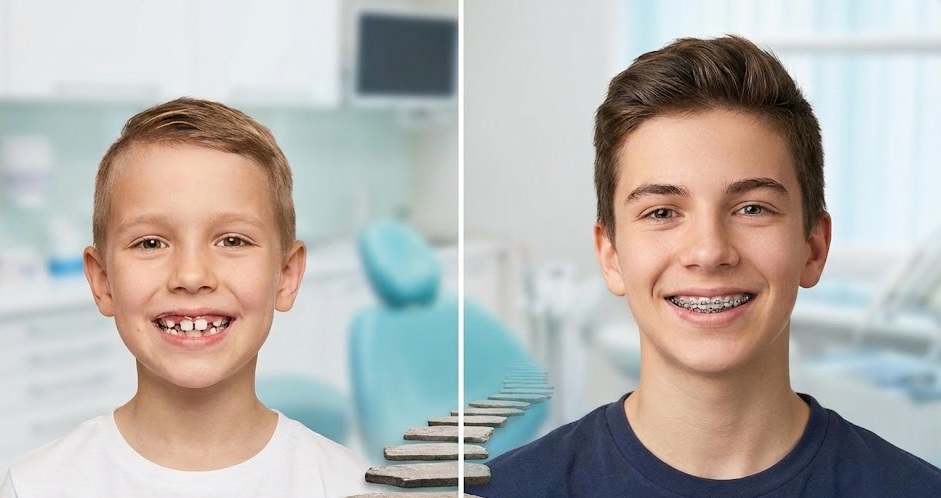
If your child has already completed early or Phase I orthodontic treatment, you might be wondering what comes next. Parents often hear the phrase “Phase II treatment” and want clear answers: Is this a full second round of braces? How is it different from what we already did? And how important is it for long term results?
Phase II orthodontic treatment is the comprehensive finishing stage that brings everything together. It builds on the foundation created in Phase I, refines alignment and bite, and sets your child up with a stable, confident smile that should last into adulthood with proper retainer wear. This guide explains how Phase II works, when it starts, what to expect, and how to help your child finish strong.
What is Phase II orthodontic treatment?
Phase II treatment is the second stage of a two phase orthodontic plan. While Phase I focuses on early problems such as jaw growth, crossbites, spacing, or harmful habits, Phase II focuses on:
- Aligning all or most of the permanent teeth
- Perfecting the bite relationship between upper and lower teeth
- Refining smile aesthetics and tooth position
- Creating a result that can be maintained with retainers
In most cases, Phase II involves full upper and lower braces or clear aligners. It is considered “comprehensive orthodontic treatment” because it addresses the entire smile and bite, not just one area of concern.
For a full picture of how different treatments fit together, you can review the practice’s overview of orthodontic services in East Tennessee.
How Phase I and Phase II work together
Phase I, also called interceptive treatment, is all about early intervention while children are still growing. The goal is not to create a movie ready smile at age eight. Instead, Phase I aims to:
- Guide jaw growth in a healthier direction
- Make space for permanent teeth
- Correct crossbites or severe overbites and underbites
- Address habits such as thumb sucking or tongue thrust
- Improve function so chewing and speech are more comfortable
For a detailed breakdown of early care, parents can read the guide to early orthodontic evaluation for East TN children and the deeper dive on interceptive orthodontics and early intervention.
Phase II comes later, once most permanent teeth have erupted. Because Phase I already handled the biggest developmental issues, Phase II can focus on:
- Fine tuning alignment
- Smoothing the smile line
- Balancing the bite so teeth fit and function well
- Increasing long term stability
Parents who have invested in Phase I often discover that Phase II is more efficient and predictable because the foundation was laid early.
When do kids usually start Phase II treatment?
There is no single “right age” for Phase II, but many kids begin between 11 and 14, when:
- Most or all permanent teeth have erupted
- Growth is still active, which helps with certain bite corrections
- Early work from Phase I has had time to stabilize
Several factors influence timing:
- How early Phase I was started
- Whether any baby teeth were lost late or unexpectedly
- Eruption patterns of canines and premolars
- How quickly your child is growing
If you are still figuring out timing, the article on when your child should first visit an orthodontist explains the recommended age seven checkup and how it shapes future planning. When changes show up more quickly than expected, when to move up your child’s orthodontic consultation is a useful guide.
The key point: Phase II should start when your child’s bite, eruption, and growth patterns make it the most effective, not just when classmates are getting braces.
What happens at the Phase II consultation?
The Phase II consultation feels similar to a first orthodontic evaluation, but with more history behind it. Your orthodontist already knows how your child responded to Phase I treatment and how their jaws and teeth have developed over time.
You can usually expect:
- Clinical exam
- Review of current tooth alignment and spacing
- Assessment of bite relationships and jaw position
- Check for any new issues since Phase I, such as crowding or rotations
- Updated diagnostic records
- Digital photos of the face and teeth
- X rays to evaluate roots and unerupted teeth
- Digital scans or impressions for precise planning
- Treatment planning conversation
- Recommended appliances for Phase II
- Estimated treatment length
- Goals for both function and aesthetics
- Expectations for home care, elastics, and follow up visits
For help making that visit smooth, especially if your child is nervous, parents can use tips from how to prepare your child for their first orthodontic appointment.
Treatment options used in Phase II
Phase II treatment is more comprehensive than Phase I, so the appliances are often more familiar: full braces or clear aligners.
Common options include:
- Metal braces
A classic choice, especially for active kids and teens. Strong and versatile, they handle simple and complex cases. - Ceramic or tooth colored braces
These blend more with the teeth, which appeals to image conscious teens. They work very similarly to metal braces. - Self ligating braces
A bracket design that uses built in clips instead of elastic ties. This can make adjustments more efficient and can feel smoother to some patients. - Clear aligners
For responsible older teens, aligners can be used to complete Phase II in a more discreet way. Many parents and teens learn more through the complete guide to orthodontic treatment for East TN teens.
Your orthodontist chooses the appliance based on the complexity of the bite, what was done in Phase I, and your child’s maturity and lifestyle. The goal is the same: a healthy, stable, attractive smile.
Daily life during Phase II: school, sports, and social life
For most kids, Phase II is the orthodontic stage that overlaps with middle school or early high school. This is also when confidence and social dynamics feel more intense, so it helps to know what to expect.
At school
- Mild soreness after appointments is normal. Plan softer lunches the day after adjustments.
- A braces care kit with a travel toothbrush, floss, orthodontic wax, and a small mirror makes life easier.
In sports and activities
- A well fitted mouthguard is important for any contact or ball sport. Your orthodontist can guide you on types that fit comfortably over braces.
- Musicians, especially those who play brass or woodwind instruments, usually adapt within a few days to weeks.
Confidence and self image
- Many teens worry at first about how braces will look. Within a few weeks, braces often feel like part of “normal life.”
- Remind your child that this is the home stretch. Phase II is the final stage before they see their long term smile.
If you need more ideas on helping your teen cope, helping your teen adjust to life with braces offers practical, teen friendly advice.
Hygiene and comfort: avoiding common Phase II pitfalls
Good habits matter more in Phase II than ever. Plaque and food can collect around braces, and poor brushing can lead to white spots or gum problems that show once the brackets come off.
Daily essentials:
- Brush after meals and before bed, using small circular motions around each bracket
- Floss at least once a day with floss threaders or orthodontic flossers
- Consider an interdental brush or water flosser for hard to reach spots
- Use fluoride toothpaste, and ask your orthodontist about fluoride rinse if needed
The article caring for braces as an East TN parent walks through specific routines, tools, and emergency tips so parents can support their child at home.
For comfort:
- Expect mild soreness after new wires or adjustments
- Over the counter pain relievers and cool foods often help
- Orthodontic wax can protect cheeks and lips from new brackets or poking wires
If you want to understand soreness and how to manage it, orthodontic pain management for sore teeth is a helpful resource.
For a quick day to day reference, the life with braces guide covers the foods to avoid, school tips, and cleaning basics that keep treatment on track.
How long does Phase II usually take?
Most Phase II treatments last between 18 and 30 months, though simpler cases can be shorter and complex bites may take longer. Timing depends on:
- How severe the initial crowding and bite issues are
- How well Phase I addressed underlying jaw or spacing problems
- Your child’s growth patterns
- Cooperation with elastics, home care, and appointments
For a step by step breakdown from consultation to retention, you can read how long orthodontic treatment takes in detail.
A key message to share with your child: their effort makes a real difference. Wearing elastics as prescribed, protecting appliances, and maintaining excellent hygiene can shorten treatment. Repeated broken brackets, missed appointments, or poor brushing almost always extend the timeline.
Retainers and life after Phase II
Once Phase II goals are met, braces come off or the final aligner is worn, and your child enters the retention phase. Retention is not optional. It is what protects every bit of effort from both phases of treatment.
Retainers may be:
- Removable clear retainers
- Traditional acrylic and wire retainers
- Fixed or bonded retainers behind the front teeth
Your orthodontist will design a retention plan that fits your child’s smile and lifestyle. The most important rule is consistency. Teeth always have some tendency to shift, especially in the first year after treatment.
To understand why retention is a long term commitment, the article on retainers after braces and the forever rule explains how retainers work and how long to wear them.
When Phase II becomes urgent: true orthodontic emergencies
Most issues during Phase II are minor, like loose elastic ties or mild irritation. However, some situations need quicker attention:
- A wire that is poking and cannot be covered with wax
- A bracket that breaks or comes off, especially on a tooth that is actively moving
- A band on a back tooth that loosens
- Sudden pain that does not improve with salt water rinses or basic remedies
Parents can use the orthodontic emergencies guide to decide what can be handled at home temporarily and what deserves a call to the office. Quick action keeps treatment on schedule and keeps your child comfortable.
How Phase II fits into your child’s long term oral health
Completed Phase II treatment does much more than straighten teeth for photos. It also:
- Improves chewing efficiency
- Reduces uneven tooth wear
- Supports healthier gums by making teeth easier to clean
- Helps prevent certain jaw issues tied to misaligned bites
- Boosts confidence in school, sports, and social settings
When you look at the whole journey, Phase II is where early planning, interceptive care, and your child’s cooperation all pay off. For a broader overview of treatment at every age, you can explore the complete guide to orthodontic treatment for every age.
If you are ready to talk about your child’s next step or want to know whether it is time to start Phase II, you can reach out directly through the contact the East Tennessee Orthodontics team page.
Frequently Asked Questions About Phase II Orthodontic Treatment
Parents often have specific questions as they move from Phase I to Phase II. These answers can help you feel more confident about what to expect.
What is the main difference between Phase I and Phase II treatment?
Phase I focuses on early problems while a child is still growing, such as jaw discrepancies, crossbites, severe crowding, or harmful habits. Phase II is comprehensive treatment aimed at aligning all or most permanent teeth, refining the bite, and finishing the smile once growth and eruption are further along.
Will my child definitely need Phase II if they already had Phase I?
In many cases, yes, but not always. Phase I reduces the severity of problems and sets up healthier growth. Some children need only minor touch ups or even no further treatment, but most benefit from Phase II to refine alignment and bite once all permanent teeth are in. Your orthodontist will explain whether Phase II is recommended based on your child’s development.
How do I know my child is ready to start Phase II?
Readiness for Phase II depends on eruption of permanent teeth, jaw growth, and the goals set during Phase I. Signs include most adult teeth being present, completed early interventions, and your orthodontist observing that the timing is ideal. If you are unsure, ask directly at your monitoring visit or review the guidance in the importance of early orthodontic treatment for your child.
How long will Phase II braces or aligners stay on?
Most Phase II treatments last from a year and a half to about two and a half years. Simpler cases may finish sooner, and more complex corrections may take longer. The timeline is affected by the complexity of the bite and how consistently your child follows instructions for elastics, appointments, and home care.
Can my child choose clear aligners instead of braces for Phase II?
Sometimes. Clear aligners can be a great option for responsible teens whose bite and tooth movements are suitable for aligner technology. Your orthodontist will let you know whether aligners are appropriate or whether braces offer better control for your child’s case. Many families start their research with articles such as Invisalign vs braces comparisons and clear aligner guides.
What can I do as a parent to keep Phase II on track?
You can help by reinforcing good brushing and flossing habits, making sure elastics are worn as prescribed, helping your child avoid foods that break brackets, and keeping up with appointments. Encouragement and a positive attitude go a long way. Using resources like how to care for braces and keep your smile healthy can make daily routines easier.
Will my child need retainers after Phase II?
Yes. Retainers are essential to keeping teeth in their new positions. Your child will likely wear retainers full time at first, then at night long term. Skipping retainers can allow teeth to drift out of alignment. The forever rule for retainers in East Tennessee smiles explains why retention is a lifelong habit.
What happens if we delay or skip Phase II treatment?
Delaying Phase II may allow minor problems to worsen, especially if crowding or bite discrepancies are still present. Skipping Phase II altogether can leave your child with a smile that is only partially corrected, which may affect chewing, wear patterns, and oral hygiene. It is always best to discuss risks and benefits directly with your orthodontist so you can make an informed decision.

-1.svg)

