
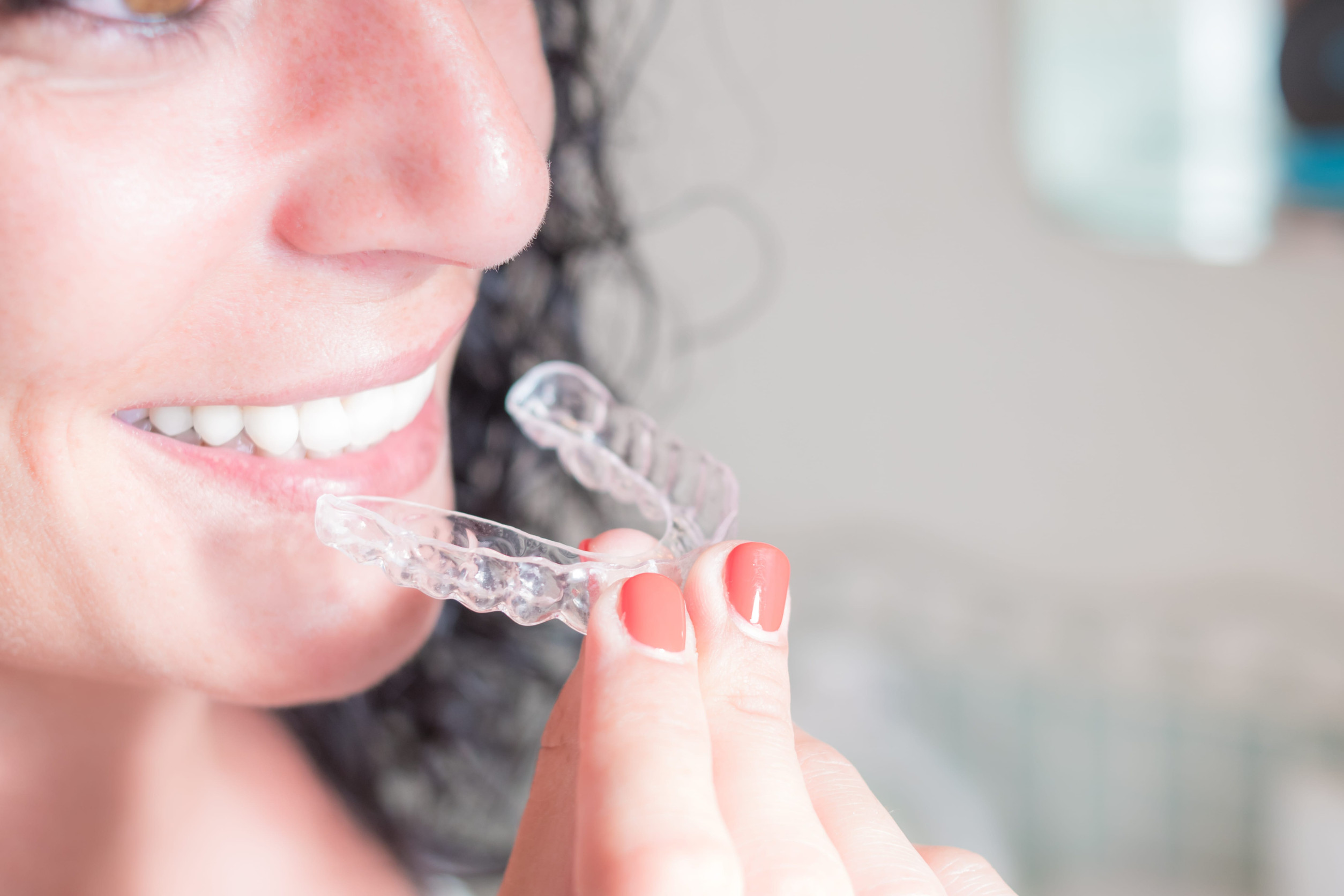
If you are starting Invisalign and your orthodontist mentions “attachments,” you might immediately picture something bulky, obvious, or uncomfortable. You may also wonder if attachments are optional, whether they stain, whether they hurt, and how they affect your daily life. Those are fair questions. Attachments are one of the most important reasons Invisalign can move teeth more predictably than simple “cosmetic tray” systems. They help your aligners grip teeth and deliver the specific forces needed for rotations, root control, and bite correction.
This guide explains what Invisalign attachments are, why they are used, what the appointment feels like, how your smile may look and feel afterward, how to clean around attachments, and what to do if an attachment falls off. If you want a general overview of aligners first, start with Invisalign clear aligners.
What are Invisalign attachments
Invisalign attachments are small, tooth-colored shapes bonded temporarily to specific teeth. They are made of composite resin, similar to the material used in tooth-colored fillings. Attachments are designed to help aligners apply controlled force to move teeth in a very specific way.
You may also hear them called:
- attachments
- Invisalign buttons (sometimes used to describe elastic buttons, which are different)
- aligner “grips”
- composite bumps
Attachments are not decorative. They are engineered “handles” that give the aligner something to push against so the tooth moves according to plan.
Why attachments are used in Invisalign treatment
Invisalign aligners fit tightly, but smooth teeth are not always easy to move with smooth plastic alone. Many tooth movements require extra leverage.
Attachments help Invisalign by:
- improving aligner grip and retention
- rotating teeth more reliably
- moving teeth vertically (intrusion or extrusion)
- improving root control, not just crown tipping
- supporting bite correction with elastics in some cases
- reducing the chance of tracking problems
- improving finishing accuracy and stability
If you ever wonder why orthodontist-supervised Invisalign is different from generic aligner programs, this is a major reason. A specialist can customize attachments and staging to match your bite and biology, not just straighten the front teeth.
What types of attachments might you get
Attachments come in different shapes depending on the movement needed. Your orthodontist designs them based on your treatment plan.
Common attachment purposes include:
Rotation control attachments
Used to rotate stubborn teeth like canines or premolars. Rotations are one of the hardest movements for aligners without attachments.
Extrusion attachments
Used to pull a tooth down slightly when it sits too high, or to improve the way teeth meet.
Intrusion attachments
Used to push a tooth slightly upward when it is too tall or creating an uneven bite.
Root control attachments
Used to guide root position, not just the visible part of the tooth. This matters for long-term stability and gum health.
You will not typically choose the attachment type. Your orthodontist chooses what is necessary to deliver the planned movements safely.
How noticeable are Invisalign attachments
This is a common concern. Most people are surprised that attachments are less noticeable than they imagined, especially when aligners are worn.
Here is what affects visibility:
- where the attachments are placed
- how many attachments you have
- your natural tooth shade and enamel texture
- whether attachments are on upper front teeth
- lighting and photography style
In normal conversation, most people do not notice them unless they are looking for them. In close-up photos, you may see them if they are on front teeth, but aligners often make them blend more than expected.
If discreet treatment is your top priority, discuss attachment placement during your consult. In many cases, your orthodontist can stage attachments or choose lower-visibility options, but only when it does not compromise results.
Do Invisalign attachments hurt
Attachments themselves do not hurt. The placement process is typically painless.
What you may feel after attachments are placed:
- mild tooth pressure from your aligners, similar to starting a new tray
- slight cheek or lip awareness because the tooth surface feels different
- temporary roughness when you run your tongue over the teeth
The rough feeling is normal at first. Your mouth adapts quickly.
If you experience soreness, it is usually from the aligner moving teeth, not from the attachment material.
For comfort strategies during the first days of Invisalign, this guide can help: orthodontic pain management.
What happens at the attachment appointment
Attachment placement is typically done at your aligner delivery visit or shortly before.
Here is what usually happens, step by step.
Step 1: Teeth are cleaned and dried
The orthodontic team will clean the teeth where attachments will be placed. Keeping the surface clean and dry is important for strong bonding.
Step 2: A gentle conditioning step
A bonding agent is used to help the composite adhere properly. This is similar to the process used for braces brackets, but generally faster.
Step 3: The attachment template is used
Your orthodontist uses a special aligner-like template that has small spaces shaped exactly like your attachments. This template ensures the attachments are placed precisely where the digital plan requires.
Step 4: Composite is placed and cured
The tooth-colored composite is placed into the template and pressed against your teeth. A curing light hardens the composite quickly.
Step 5: The template is removed and attachments are polished
Once cured, the template is removed and the attachments are checked for smoothness. Any rough edges may be polished to improve comfort.
Step 6: Your aligners are fitted
Your first aligners are placed to confirm fit. Your orthodontic team will make sure the aligners seat properly over the attachments.
The entire appointment is usually straightforward. Many patients are surprised by how “non-event” it feels.
What it feels like immediately after attachments are placed
Most patients notice two things:
- aligners feel snugger
- teeth feel slightly textured when aligners are out
That is normal because attachments increase grip. Aligners may require a bit more technique to remove at first.
First-day expectations
- Plan a few extra minutes for removal and insertion
- Expect mild pressure when seating aligners
- Use your chewies if your orthodontist provided them to help seat aligners fully
If you struggle to remove aligners at first, do not panic. The learning curve is real but short.
How to remove aligners with attachments
Attachments can make aligners feel more secure, which is the point, but it can also make removal harder at first.
A simple removal method
- Wash your hands
- Start on the inside back of the aligner, not the front
- Gently lift the aligner off the back molars first
- Work forward slowly, releasing the aligner from attachments
- Remove the aligner evenly, not by yanking from one side
If you remove aligners from the front first, you may stress the plastic. Back-first removal is more controlled.
Some patients benefit from an aligner removal tool. If you have long nails or limited grip strength, ask your orthodontic team for suggestions.
Eating with attachments
You do not eat with Invisalign aligners in. But you do eat with attachments on your teeth, because attachments remain in place throughout treatment.
Attachments may slightly change the feel of your teeth when chewing, especially in the first week. Most patients adapt quickly.
Food tips for the first few days
- Choose softer foods if your teeth are sore
- Avoid very sticky foods that can pull on attachments
- Rinse after meals if you cannot brush immediately
The better you keep teeth clean, the less likely attachments are to stain.
Do attachments stain
Attachments can stain, but the risk is manageable.
Attachments are made of composite resin, which can absorb stain more readily than enamel. Staining depends on your habits.
Common staining triggers:
- coffee and tea
- red wine
- curry and strongly colored sauces
- tobacco use
- poor brushing around attachments
How to reduce staining
- Brush after coffee when possible
- Rinse with water after dark drinks
- Use a straw for iced coffee or tea
- Keep up with regular dental cleanings
- Avoid frequent sipping throughout the day
If staining does occur, it is usually cosmetic and temporary, because attachments are removed at the end of treatment. If staining bothers you during treatment, your orthodontist can often polish attachments.
How to brush and floss with attachments
Attachments create small edges on tooth surfaces that can trap plaque if you do not brush thoroughly.
Best practice brushing routine
- Brush twice daily for two minutes
- Angle the brush to clean around attachment edges
- Use small circular motions, not aggressive scrubbing
- Consider an electric toothbrush if you tend to rush
Helpful tools
- floss once daily
- a water flosser can help with plaque disruption
- interdental brushes can clean around attachment edges effectively
If you want a broader hygiene framework, the habits in life with braces also apply to aligners in many ways because plaque control principles are the same.
What if an attachment falls off
Attachments can fall off occasionally. It is not a disaster, but you should let your orthodontist know.
Common reasons attachments come off:
- biting into hard foods
- heavy clenching
- bonding surface contamination during placement
- an attachment placed on a tooth with a short bonding surface
What to do
- Save the piece if you can, but it is usually not needed
- Continue wearing aligners as normal
- Call the office and ask whether it needs replacement immediately
Sometimes an attachment must be replaced quickly because it is essential for upcoming movements. Sometimes it can wait until your next visit. Your orthodontist will tell you which applies.
If you need guidance on what counts as urgent, use orthodontic emergencies for general troubleshooting principles.
Attachments and refinements
Even with perfect compliance, some Invisalign cases need refinements near the end. Refinements are additional aligners designed to fine-tune details.
Attachments are often part of refinement success because they:
- improve tracking
- allow precise finishing movements
- help close small spaces and refine rotations
If your orthodontist recommends refinements, it does not mean treatment failed. It means your bite is being finished with precision.
Can you whiten while you have attachments
Many patients ask about whitening because attachments and aligners make them more focused on their smile. Whitening during attachments is possible in some cases, but you should be cautious.
Important considerations:
- composite attachments do not whiten like natural enamel
- if you whiten aggressively, enamel may lighten while attachments stay the same shade
- attachments are temporary, so many patients wait until attachments are removed for the most even whitening result
The most predictable approach for an even final color is whitening after treatment or after attachments are removed.
How long will you have attachments
Most patients have attachments for most of their Invisalign treatment. Some cases may have attachments added or removed during different phases, but many keep them in place until the end.
Your orthodontist may adjust attachments if:
- a tooth is not tracking well
- you transition into a refinement phase
- bite correction requires a different movement approach
Attachments are part of the strategy, not a permanent feature.
What happens when attachments are removed
At the end of active aligner treatment, attachments are removed in the office. The process is usually quick and comfortable.
What to expect:
- the orthodontist gently removes composite using polishing tools
- teeth are smoothed and polished
- you may feel a slightly different texture at first as your tongue adjusts
- your retainer plan begins
If you want to understand how to keep results stable after aligners, read retainers after braces and the forever rule. The principle is the same after Invisalign: retention protects your investment.
Common mistakes that cause attachment issues
If you want your attachments to stay put and look clean, avoid these common mistakes.
- biting directly into hard foods like apples, crusty bread, or hard candy
- chewing ice
- skipping brushing around attachments
- frequent coffee sipping without rinsing
- not seating aligners fully, leading to uneven stress on attachments
- removing aligners aggressively from the front
Small habit changes prevent most attachment problems.
When to call your orthodontist about attachments
Call the office if:
- an attachment falls off and your aligner suddenly feels loose
- you cannot seat your aligner fully despite using chewies
- you notice persistent tracking gaps where the aligner is not fitting the tooth
- an attachment feels sharp or is cutting your cheek
- you feel a sudden bite change that seems connected to fit issues
When in doubt, it is always better to ask early. Small fit problems become bigger if they continue for weeks.
To schedule an Invisalign consultation or check-in, use Contact Us.
Conclusion
Invisalign attachments are one of the biggest reasons clear aligners can do more than minor cosmetic straightening. Attachments give your aligners the grip and leverage needed to rotate teeth, control roots, guide bite correction, and finish results with precision. The placement appointment is usually quick and comfortable, and the adjustment period is typically short. With good cleaning habits, mindful food choices, and proper aligner wear, attachments become a simple, manageable part of your daily routine.
If you are considering Invisalign or want a treatment plan built for predictable results, start with Invisalign clear aligners and schedule your visit through Contact Us.

-1.svg)

