
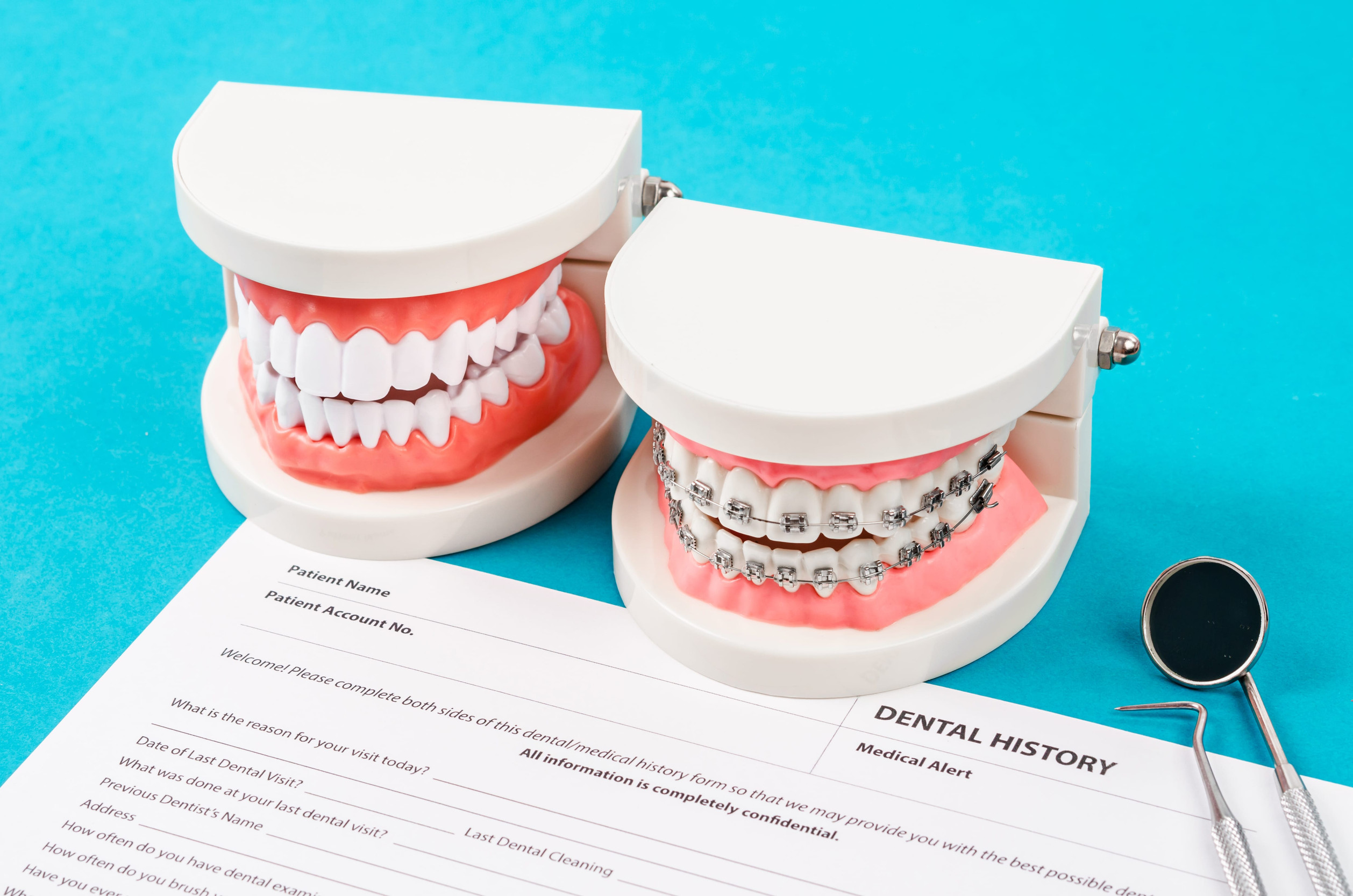
Canine teeth play a major role in your child’s smile, bite, and long term oral health. These pointed teeth help guide the bite, support facial balance, and protect other teeth during chewing. Because canines are so important, orthodontists pay close attention to how they develop and erupt. When a canine tooth does not come in properly, it may become impacted, meaning it is trapped under the gums or blocked from erupting into its correct position.
Impacted canines can create serious problems if they are not detected early. They may damage nearby roots, cause crowding, delay treatment, or require more complex surgical and orthodontic care later. The good news is that orthodontists are trained to identify canine eruption problems before they become major surprises. With early evaluation, digital imaging, and careful monitoring, many impacted canine cases can be guided more predictably and sometimes prevented from becoming surgical emergencies.
This guide explains why canine teeth become impacted, how orthodontists detect the warning signs early, what treatment options may be recommended, and how parents can help protect their child’s developing smile. For a broader overview of early orthodontic care, start with orthodontic services.
What Is an Impacted Canine
An impacted canine is a canine tooth that cannot erupt normally into the mouth. Instead of coming down into its proper position, it may remain trapped in the gum tissue or bone. It may be angled too far forward, too far backward, too high, or too close to the roots of neighboring teeth.
The upper canines are especially prone to impaction. These teeth have one of the longest eruption paths in the mouth. They begin developing high in the upper jaw and must travel a long distance before they reach their final position. Because of that long path, small problems with spacing, crowding, tooth angle, or timing can turn into larger eruption issues.
An impacted canine is not always painful. In fact, many children and teens have no symptoms at all. That is why orthodontic screening is so important. The problem may be invisible from the outside until imaging reveals that the tooth is not on track.
Why Canine Teeth Matter So Much
Canines are not just “corner teeth.” They are some of the most important teeth in the mouth.
Canines help with:
- Guiding the bite during side to side jaw movement
- Protecting back teeth from excessive wear
- Supporting the shape of the smile
- Maintaining facial balance around the upper lip
- Helping with tearing and chewing food
- Creating a natural transition between front and back teeth
When a canine is missing, impacted, or out of position, the bite may not function as well. Other teeth may carry forces they were not designed to handle, which can increase the risk of wear, shifting, and long term instability.
For a deeper explanation of how bite relationships affect overall oral health, review malocclusion types and bad bites.
Why Canines Become Impacted
Impacted canines can develop for several reasons. In many cases, more than one factor is involved.
Lack of Space
Crowding is one of the most common reasons canine teeth do not erupt normally. If there is not enough room in the dental arch, the canine may become blocked by neighboring teeth.
This can happen when:
- Baby teeth are lost too early or too late
- Permanent teeth erupt out of sequence
- The jaw is too narrow
- Front teeth are crowded
- The canine is angled poorly before eruption
Genetics
Some children inherit tooth size, jaw size, or eruption patterns that increase the risk of impaction. If parents or siblings had impacted canines, missing teeth, or significant crowding, early evaluation is especially important.
Retained Baby Canines
A baby canine that does not loosen or fall out on time may block the permanent canine. Sometimes the baby tooth remains in place because the permanent tooth is not pushing down correctly. This is a clue that the eruption path should be checked.
Abnormal Tooth Position
A canine may begin moving toward the palate, toward the cheek, or toward the roots of nearby teeth. Once the tooth is significantly off course, it may not self correct without intervention.
Missing or Small Lateral Incisors
The lateral incisors sit next to the upper front teeth and help guide canine eruption. If these teeth are missing, undersized, or unusually shaped, the canine may lose its natural eruption guide and drift into an impacted position.
Why Early Detection Matters
The earlier an orthodontist detects an at-risk canine, the more options are available. Early detection can reduce the chance of complex treatment and may help avoid surgical surprises.
Early detection can help:
- Create space before the canine becomes fully impacted
- Remove obstacles in the eruption path
- Monitor whether the tooth is improving or worsening
- Reduce risk of damage to nearby roots
- Shorten future orthodontic treatment
- Improve the chance of natural eruption
Waiting too long can limit options. Once the canine is deeply impacted or positioned against neighboring roots, treatment may require surgical exposure and guided eruption with braces.
The purpose of early care is not to rush children into treatment. It is to identify problems while growth and eruption patterns can still be guided. The guide to early orthodontic evaluation for East TN children explains how these early visits help orthodontists make better timing decisions.
What Orthodontists Look for Around Age Seven
The age seven orthodontic checkup is an important screening milestone. At this stage, children usually have a mix of baby teeth and permanent teeth. The first permanent molars and incisors have often erupted, giving orthodontists valuable information about spacing and bite development.
During an early checkup, the orthodontist may look for:
- Whether permanent teeth are erupting in the right order
- Whether there is enough space for future canines
- Whether baby canines are loosening on schedule
- Whether the dental arch is narrow
- Whether crowding is already developing
- Whether the bite shows signs of crossbite or jaw shift
The canine teeth may not be ready to erupt at age seven, but their future path can often be evaluated. For more detail on what orthodontists evaluate at this stage, see the age seven orthodontic checkup.
Warning Signs Parents May Notice
Impacted canines are often detected on X-rays before parents see any obvious problem. Still, there are signs that may suggest the need for evaluation.
Parents should watch for:
- A baby canine that does not loosen when expected
- One canine erupting while the other does not
- A visible bulge high in the gum tissue
- Crowding in the upper front teeth
- Permanent front teeth shifting unexpectedly
- A tooth erupting high in the gumline
- Space closing where the canine should come in
- Family history of impacted teeth
One delayed tooth does not automatically mean impaction, but asymmetry is worth checking. If one side is developing normally and the other side is not, an orthodontist can determine whether imaging is needed.
How Dental X-Rays Help Detect Impacted Canines
Imaging is one of the most important tools for detecting impacted canines early. A visual exam can only show teeth that have erupted or are close to the surface. X-rays help reveal what is happening under the gums.
Orthodontists may use imaging to evaluate:
- The angle of the canine
- Whether the canine is moving toward the palate or cheek
- How close it is to nearby roots
- Whether there is enough space for eruption
- Whether baby teeth are blocking the path
- Whether root development is normal
A panoramic X-ray is commonly used because it shows all teeth and jaws in one image. In more complex cases, 3D imaging may be considered to understand the exact position of the impacted tooth.
Why Impacted Canines Can Become Surgical Surprises
A surgical surprise happens when an impacted canine is discovered late, after it has already created a more complicated problem. The child may be older, the tooth may be deeply positioned, or nearby roots may already be at risk.
Late detection can lead to:
- Longer orthodontic treatment
- Surgical exposure of the impacted tooth
- More complex braces mechanics
- Higher risk of root damage to nearby teeth
- More discomfort and anxiety for the patient
- Greater financial and scheduling stress for families
Early orthodontic monitoring reduces these surprises. It gives the orthodontist time to track development and intervene before the canine is fully trapped.
Interceptive Steps That May Help Avoid Surgery
Not every at-risk canine requires surgery. When detected early enough, orthodontists may recommend interceptive steps to improve the eruption path.
Creating Space
If crowding is blocking the canine, orthodontic treatment may focus on creating enough room. This may involve expanders, limited braces, or other appliances depending on the child’s growth and arch shape.
Removing a Baby Canine
In selected cases, removing the baby canine at the right time can encourage the permanent canine to correct its path. This is not done randomly. It is based on imaging, timing, and the position of the permanent tooth.
Palatal Expansion
If the upper jaw is narrow, expansion may create more room and improve the eruption path. This is especially helpful when crowding or crossbite is present. To learn more about this appliance, review what a palatal expander is and when it is needed.
Monitoring With Follow-Up Imaging
Sometimes the best option is careful monitoring. If the canine looks slightly off track but not severely impacted, the orthodontist may schedule follow-up visits and imaging to see whether it improves naturally.
When Surgical Exposure Is Needed
Sometimes, even with good monitoring, a canine will not erupt on its own. In those cases, surgical exposure and orthodontic guidance may be recommended.
This usually involves:
- An oral surgeon exposes the impacted canine.
- A small attachment may be bonded to the tooth.
- The orthodontist uses braces to gently guide the canine into place over time.
This process can be very effective, but it requires careful coordination between the orthodontist and surgeon. The goal is controlled movement that protects nearby teeth and brings the canine into a healthy position.
Surgical exposure is not a failure. It is a treatment option used when the tooth needs help erupting. Early detection still matters because it can make the process more predictable.
Why Braces Are Often Needed for Impacted Canines
Clear aligners can treat many orthodontic problems, but impacted canine guidance often requires the control of braces. Braces allow the orthodontist to apply precise forces to guide the tooth into position slowly and safely.
Braces may be used to:
- Open space for the impacted canine
- Maintain space during eruption
- Attach force to the exposed tooth
- Control root position
- Coordinate the final bite
For families comparing appliance options, dental braces treatment provides an overview of how braces support controlled tooth movement.
How Long Treatment Can Take
Treatment time depends on how early the canine is detected and how complex the position is.
General expectations:
- Early monitoring may continue for months or years before active treatment
- Space creation may take several months
- Surgical exposure and guided eruption can add significant time
- Comprehensive braces treatment may continue after the canine is brought in
The more severe the impaction, the longer treatment may take. This is one reason early detection is valuable. A canine that can be redirected early is often easier to manage than one that is deeply impacted later.
What Parents Can Do to Help
Parents do not need to diagnose impacted canines at home. The most important role parents play is scheduling timely evaluations and following through with recommended monitoring.
Helpful steps include:
- Schedule an orthodontic evaluation around age seven
- Keep regular dental checkups
- Ask about delayed or retained baby canines
- Mention family history of impacted teeth or missing teeth
- Follow recommended monitoring visits
- Do not ignore asymmetry between the left and right sides
If treatment is recommended, help your child understand that the goal is to protect their future smile and avoid bigger problems later.
How to Prepare a Child for Canine Monitoring or Treatment
Children may feel nervous if they hear words like “impacted,” “surgery,” or “exposure.” Parents can help by keeping explanations calm and simple.
Helpful language:
- “The orthodontist is checking how your grown-up teeth are coming in.”
- “This tooth needs some help finding its spot.”
- “We are doing this early so treatment can be easier later.”
Avoid making the situation sound scary. Early detection is good news because it creates more options.
For comfort and daily care once appliances are involved, life with braces offers helpful guidance for families.
What Happens If an Impacted Canine Is Not Treated
Leaving an impacted canine untreated can sometimes be safe if the tooth is stable and not harming nearby structures, but many cases need active management. The risks depend on the tooth’s position.
Potential risks include:
- Damage to roots of nearby teeth
- Cyst formation around the impacted tooth
- Persistent baby tooth retention
- Smile asymmetry
- Bite problems
- Need for more complex treatment later
An orthodontist can explain whether observation is safe or whether treatment is recommended.
The Role of Team-Based Care
Impacted canine treatment often involves collaboration. Your child’s care may include:
- Orthodontist for diagnosis, space creation, and guided eruption
- General dentist for routine dental health
- Oral surgeon if exposure is needed
- Parents for appointment consistency and home care support
Good communication reduces surprises and helps treatment move smoothly.
Frequently Asked Questions
Can an impacted canine come in on its own
Sometimes, yes. If the tooth is only slightly off course and there is enough space, it may improve with monitoring or minor interceptive steps. More severe impactions usually need orthodontic guidance.
Is an impacted canine painful
Often, no. Many impacted canines cause no pain at all, which is why X-rays and early orthodontic evaluations are important.
What age should impacted canines be checked
Children should have an orthodontic evaluation around age seven. Canine eruption is monitored over time as permanent teeth develop.
Does every impacted canine need surgery
No. Some at-risk canines can be redirected with early space creation, baby tooth removal, or monitoring. Surgery is used when the tooth cannot erupt normally on its own.
Can Invisalign fix an impacted canine
Invisalign may be useful after the canine is erupted and alignment needs finishing, but impacted canine guidance often requires braces for more precise control.
Conclusion
Impacted canines can be serious, but they do not have to become surgical surprises. Orthodontists detect canine eruption problems through early evaluation, careful monitoring, and diagnostic imaging. When problems are caught early, treatment may be simpler, more predictable, and less invasive.
The best approach is proactive. Schedule the age seven evaluation, watch for delayed canine eruption, keep recommended monitoring visits, and ask questions when development looks uneven. Early detection protects your child’s bite, smile, and long term oral health.
To learn more about early orthodontic screening, visit orthodontic services or schedule an evaluation through Contact Us.

-1.svg)

