
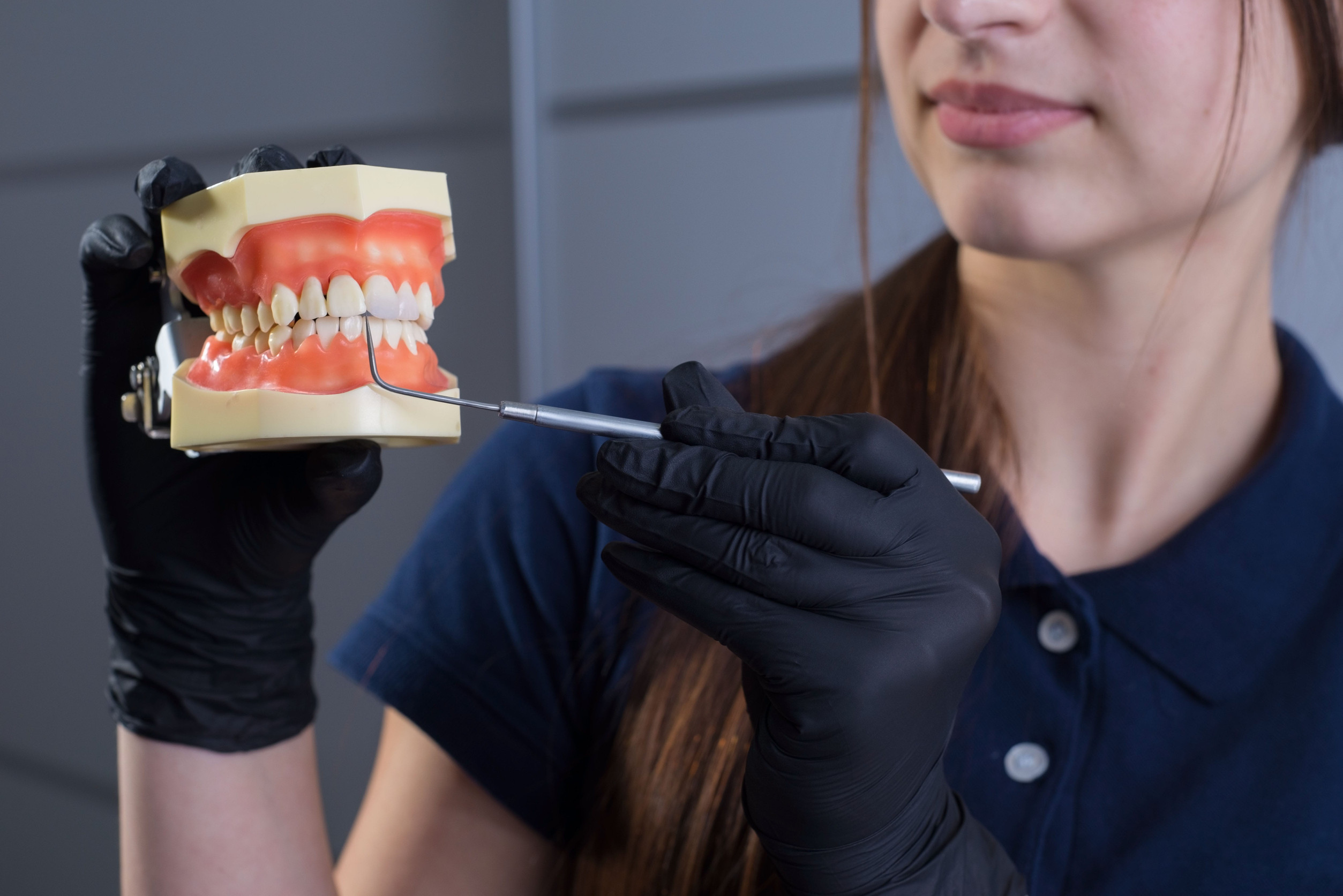
When most people think about orthodontic treatment, their minds immediately jump to aesthetics. They picture a beautifully straight row of teeth, a symmetric smile, and the confidence boost that comes with a transformed appearance. While cosmetic enhancement is undoubtedly a wonderful outcome of orthodontics, it is only the surface-level manifestation of a far deeper, more critical biological objective: engineering a healthy, functional, and sustainable bite.
Your teeth are part of a highly complex biological machine known as the stomatognathic system, which includes your jaws, jaw joints (temporomandibular joints), muscles of mastication, and the neurological pathways that control them. Every single day, your teeth smash, grind, and slide against one another to chew food, speak, and manage stress through involuntary habits like clenching or grinding. If the components of this biological machine do not line up perfectly, the laws of physics dictate that something has to give. More often than not, it is your tooth structure that bears the brunt of the damage.
Orthodontics is, at its core, oral engineering. An orthodontist’s primary goal is to align your teeth and jaws in a way that distributes the immense forces of chewing evenly across your entire mouth. By precisely planning how your upper and lower teeth meet—a relationship known as occlusion—orthodontists prevent your teeth from destroying themselves through premature wear and tear.
The Physics of the Human Bite: A Biological Sledgehammer
To appreciate how orthodontists protect your teeth from wearing down, you must first understand the incredible forces at play inside your mouth. The human jaw is a lever system capable of generating astonishing amounts of pressure. When you chew normally, your molars experience forces ranging anywhere from 70 to 150 pounds of pressure per square inch (PSI). If you suffer from nocturnal bruxism (nighttime teeth grinding or clenching), those forces can skyrocket to an unbelievable 200 to 500 PSI.
Mastication Forces:
Normal Chewing:  [||||||||||||] 70 - 150 PSI
Bruxism/Grinding:[||||||||||||||||||||||||||||||||||] 200 - 500 PSI
In a perfectly balanced bite, this massive structural load is distributed harmoniously. Your back teeth (molars and premolars) are designed to absorb vertical forces, acting as shock absorbers during heavy chewing. Your front teeth (incisors and canines) are designed to shear food and guide your jaw during sideways movements.
However, when your teeth are misaligned, these forces are no longer distributed evenly. Instead, the biological machine suffers from localized mechanical overloads. Imagine driving a car with wheels that are out of alignment; certain areas of the tire tread will bald rapidly while others remain intact. The same phenomenon occurs in your mouth. Misalignment creates localized high-pressure contact zones where teeth collide with destructive force. Over years and decades, this constant friction erodes the protective layers of your teeth, leading to irreversible structural deterioration.
Understanding Malocclusion and Accelerated Tooth Wear
In orthodontics, an improper relationship between the upper and lower teeth is called a malocclusion. Different types of bad bites subject different groups of teeth to unnatural mechanical stress, causing distinct patterns of premature wear. Understanding the variations in types of bad bites and malocclusions is central to recognizing how long-term damage occurs.
1. The Destructive Impact of Crossbites
A crossbite occurs when one or more of your upper teeth bite inside your lower teeth rather than outside. This can happen at the front of the mouth (anterior crossbite) or at the back (posterior crossbite).
When you have a crossbite, the teeth are forced to slide past each other in an unnatural trajectory every time you close your mouth. This creates severe lateral (sideways) forces on teeth that are only built to handle vertical pressure. The result is rapid enamel loss at the points of contact. Furthermore, to find a comfortable resting spot, the brain often forces the jaw to shift sideways, putting immense strain on the temporomandibular joints (TMJ) and accelerating wear on the opposing dental arches.
2. Deep Overbites and Front Tooth Attrition
An overbite is a normal characteristic where the upper front teeth overlap the lower front teeth vertically. However, when that overlap becomes excessive—known as a deep bite—the lower front teeth can become completely trapped behind the upper teeth.
In a severe deep bite, the lower incisors frequently edge right up against the back surfaces of the upper incisors or even dig directly into the palatal tissue behind them. As the jaw moves forward and backward during speech and chewing, the continuous scraping forces strip the protective enamel away from the backs of the upper teeth and the biting edges of the lower teeth. Over time, these teeth become visibly shorter, chipped, and structurally compromised.
3. Underbites and Edge-to-Edge Trauma
An underbite occurs when the lower jaw protrudes forward, causing the lower front teeth to sit ahead of the upper front teeth. A variation of this is an edge-to-edge bite, where the incisors meet directly on top of one another.
Teeth are simply not designed to collide edge-to-edge. When they do, the concentrated vertical impact shatters the thin enamel borders of your front teeth. This flat-on-flat collision creates a sawing effect during chewing movements, making it incredibly common for individuals with underbites to experience severe flattening, thinning, and fracturing of their prominent anterior teeth.
To explore these phenomena in greater detail, it helps to look into why misaligned teeth grind themselves down, a comprehensive look at the friction-based degradation of uncorrected malocclusions.
The Anatomy of Destructive Wear: From Enamel to Exposed Dentin
When teeth wear down due to mechanical friction, the dental term used is attrition. Attrition is a progressive condition that advances through distinct biological layers, each with its own set of painful and costly consequences.
Progressive Tooth Attrition:
[ Enamel Layer ] -> Initial wear, micro-fractures, loss of protective barrier
       ↓
[ Dentin Layer ] -> Rapid erosion, yellow coloration, thermal sensitivity
       ↓
[ Pulpal Chamber ] -> Nerve exposure, chronic pain, structural failure
The outermost layer of your tooth is enamel, which is the hardest material in the human body—even harder than steel. Enamel exists explicitly to insulate your teeth and protect the sensitive living tissues inside. However, despite its incredible strength, enamel is brittle and susceptible to micro-fractures when subjected to continuous, poorly distributed stresses.
Once the enamel layer is breached or completely ground away by a misaligned bite, the underlying layer is exposed: the dentin. Dentin is fundamentally different from enamel; it is much softer, highly porous, and contains thousands of microscopic tubules leading directly to the tooth’s nerve center (the pulp). Because dentin is structurally weaker than enamel, it wears away at a rate that is roughly ten times faster.
When your bite exposes the dentin, a destructive spiral begins:
- Severe Tooth Sensitivity: Exposed dentin tubules allow hot, cold, sweet, and acidic triggers to stimulate the dental nerve directly, causing sharp, chronic pain.
- Esthetic Collapse: Dentin is naturally yellow. As enamel thins, teeth look increasingly yellow, dark, and aged. Biting edges look jagged, see-through, or completely flat.
- Increased Decay Risk: Because dentin is softer and more porous, it is far more vulnerable to acid attacks and bacterial decay.
- Loss of Vertical Dimension: As the teeth shorten, the lower third of the face can actually lose height over several decades, leading to a collapsed, prematurely aged facial profile and strained jaw muscles.
How Orthodontists Diagnose and Plan the Ideal Bite
Preventing this lifelong structural decline requires precise, highly customized diagnostic planning. Orthodontists do not simply look into your mouth and start moving teeth; they utilize advanced bio-mechanical engineering workflows to design a bite blueprint that is uniquely tailored to your skeletal framework.
1. Capturing the Oral Topography
The planning process begins with data collection. Modern orthodontic practices have transitioned away from the messy, uncomfortable alginate "goopy molds" of the past. Instead, they use advanced digital impressions and 3D printing technology to create a flawless, highly detailed digital twin of your oral cavity. These intraoral scanners capture thousands of data points per second, building an interactive 3D rendering of your teeth and gums that can be analyzed from any angle.
2. Cephalometric and Panoramic Radiography
To build a sustainable bite, an orthodontist must evaluate the underlying bone structure. Digital panoramic X-rays provide a comprehensive view of the teeth, roots, and jaw bone health, while cephalometric X-rays capture a side profile view of your skull and face. These images allow the doctor to measure the exact angles of your jaws relative to your skull and determine whether your bite issues are purely dental (crooked teeth) or skeletal (mismatched jaw sizes).
3. Virtual Bite Simulation and Kinematics
Using specialized software, the orthodontist can simulate the dynamic movements of your jaw. They don't just look at how your teeth fit together when you hold still; they trace how your teeth will touch when your jaw slides forward, backward, and side-to-side. By visualizing these paths of motion digitally, the doctor can identify "working interferences"—hidden contact points that would cause tooth wear down the road—and design a precise treatment plan to eliminate them.
The Blueprint of a Perfect Bite: Canine Guidance and Mutually Protected Occlusion
When orchestrating your treatment plan via braces or clear aligners, your orthodontist is aiming to achieve a specific clinical gold standard known as Mutually Protected Occlusion. This concept is the ultimate shield against long-term tooth wear.
Mutually protected occlusion is an arrangement where the back teeth protect the front teeth, and the front teeth protect the back teeth. It relies on two primary mechanics:
Centric Occlusion (Maximum Intercuspation)
When you close your mouth completely to bite down on food, your back teeth should make firm, simultaneous contact, while your front teeth touch very lightly. Because your molars have flat surfaces, multiple roots, and sit closer to the jaw joint lever, they are structurally optimized to bear the heavy vertical forces of closing your jaw. This heavy back contact keeps the delicate, single-rooted front teeth from being slammed together and fractured.
Canine Guidance (Disclusion)
When you slide your jaw to the left or the right, your upper and lower canines (the sharp, pointed corner teeth) should smoothly ride over one another. As they do, the height of the canines should instantly lift the back teeth apart, preventing your upper and lower molars from rubbing against each other sideways.
Canines have the longest, thickest roots of any teeth in the human mouth, surrounded by dense structural bone. They are purpose-built by nature to handle these punishing sideways rubbing forces. By ensuring that your canines guide your sideways jaw movements, your orthodontist makes sure your flat molars never experience destructive lateral friction, keeping them pristine over your lifetime.
Biomechanical Interventions: Moving Teeth to Balance the Load
Once the ideal bite blueprint is established, the orthodontist utilizes precise biomechanical forces to guide the teeth, roots, and jaws into their optimal positions. This can be accomplished through a variety of modern appliances, depending on the patient's age and structural needs.
Understanding exactly how braces correct bite issues and jaw alignment gives us insight into this complex transformational journey. Orthodontic appliances do not merely tip the crowns of the teeth into a straight line; they systematically remodel the surrounding alveolar bone.
Orthodontic Forces in Action:
[ Appliance Pressure ] -> Activates Osteoclasts (breaks down bone ahead of movement)
                        -> Activates Osteoblasts (builds new bone behind movement)
                        -> Results in balanced tooth & root positioning
- Traditional and Ceramic Braces: By placing brackets on the teeth and running a sequence of memory-shape archwires through them, orthodontists apply continuous, gentle pressure. This pressure coordinates the width of the upper and lower arches, aligning the teeth so that the cusps (peaks) of the upper teeth nestle perfectly into the fossae (valleys) of the lower teeth.
- Clear Aligners: Utilizing a series of custom-engineered plastic trays, clear aligners apply highly targeted forces to specific teeth. Advanced software coordinates these movements stage-by-stage to expand arches, resolve crowding, and correct deep bites or open bites predictably.
- Orthodontic Elastics (Rubber Bands): While brackets and aligners straighten individual arches, elastics are the critical engine used to connect the upper and lower arches. By stretching rubber bands between specific points on the top and bottom teeth, the orthodontist can pull the lower jaw forward, backward, or shift it laterally, actively correcting underbites, overbites, and crossbites.
- Palatal Expanders: In growing children or through specialized adult expansion protocols, a palatal expander can gently widen a narrow upper jaw. This corrects posterior crossbites at the skeletal level, creating adequate space for the teeth to meet seamlessly without sideways jaw shifting.
The Restorative Connection: Fixing Worn Teeth After Realignment
In many cases, adults seek out orthodontic treatment after years or even decades of living with a misaligned bite. By the time they sit in the orthodontist's chair, substantial damage has already been done; their front teeth may already be chipped, uneven, flattened, or severely shortened.
This scenario requires a multi-disciplinary approach. If a general or cosmetic dentist attempts to place porcelain veneers, crowns, or cosmetic bonding onto worn teeth before correcting the underlying bite issue, those expensive restorations are highly likely to fail. The same destructive, unbalanced forces that ground down the natural enamel will quickly snap, crack, or dislodge the artificial porcelain or composite resin material.
Therefore, the orthodontist must clear the path first. The orthodontist moves the roots and crowns of the teeth into the ideal positions, opening up the correct vertical space and establishing proper canine guidance. Once a safe, mutually protected environment is built, the patient can transition back to their dentist to safely protect worn front teeth and improve your bite using long-lasting cosmetic restorations that will no longer be subjected to traumatic mechanical overload.
Long-Term Preservation: Retainers and Preventative Care
Moving your teeth into a balanced, wear-resistant position is a massive achievement, but the human body is dynamic and constantly changing. As we age, our bones, muscles, and soft tissues shift. Without preservation strategies, teeth have a natural tendency to drift back toward their original positions—a phenomenon known as orthodontic relapse.
If your teeth shift out of alignment, the carefully engineered force distribution collapses, and localized high-pressure wear patterns can return. This is why the retention phase of orthodontic treatment is just as critical as the active moving phase.
The Mechanics of Oral Longevity:
[ Perfect Aligned Bite ] + [ Consistent Retainer Wear ] = Lifetime Preservation of Enamel
Custom retainers hold the teeth firmly in their ideal spots, allowing the surrounding bone and periodontal ligaments to fully solidify around the new root positions. Wearing your retainer as prescribed by your orthodontist acts as a lifetime insurance policy for your smile. It ensures that the protective mechanics—like canine guidance and even force distribution—remain intact for decades to come, safeguarding your natural enamel against the relentless forces of daily wear.
Investing the time and effort into comprehensive bite correction yields vast structural dividends. The ultimate value of this process is detailed beautifully in our analysis of the lifetime health benefits of a corrected smile and bite, which reviews how balanced occlusion preserves oral function, protects joint health, and eliminates dental pain throughout your life.
Conclusion: Orthodontics as an Investment in Structural Longevity
Your smile is meant to last a lifetime. Yet, millions of people find themselves dealing with fracturing dental work, thinning teeth, chronic temperature sensitivity, and a collapsing smile as they age—all because their teeth have spent years grinding each other down due to a hidden malocclusion.
Orthodontics is far more than a cosmetic luxury; it is a vital preventative intervention. By utilizing state-of-the-art diagnostic technology, understanding the complex physics of mastication, and carefully executing detailed biomechanical blueprints, orthodontists build a foundation of health and structural balance.
By aligning your jaws, eliminating destructive interferences, and establishing a mutually protected bite, orthodontic care stops premature tooth wear before it can cause permanent damage. If you want to protect your teeth from the slow, costly march of attrition and ensure that your biological machine runs smoothly for decades to come, reaching out for an orthodontic evaluation is the most effective proactive step you can take. Your enamel is irreplaceable—and engineering a perfect bite is the ultimate way to preserve it.

-1.svg)

