
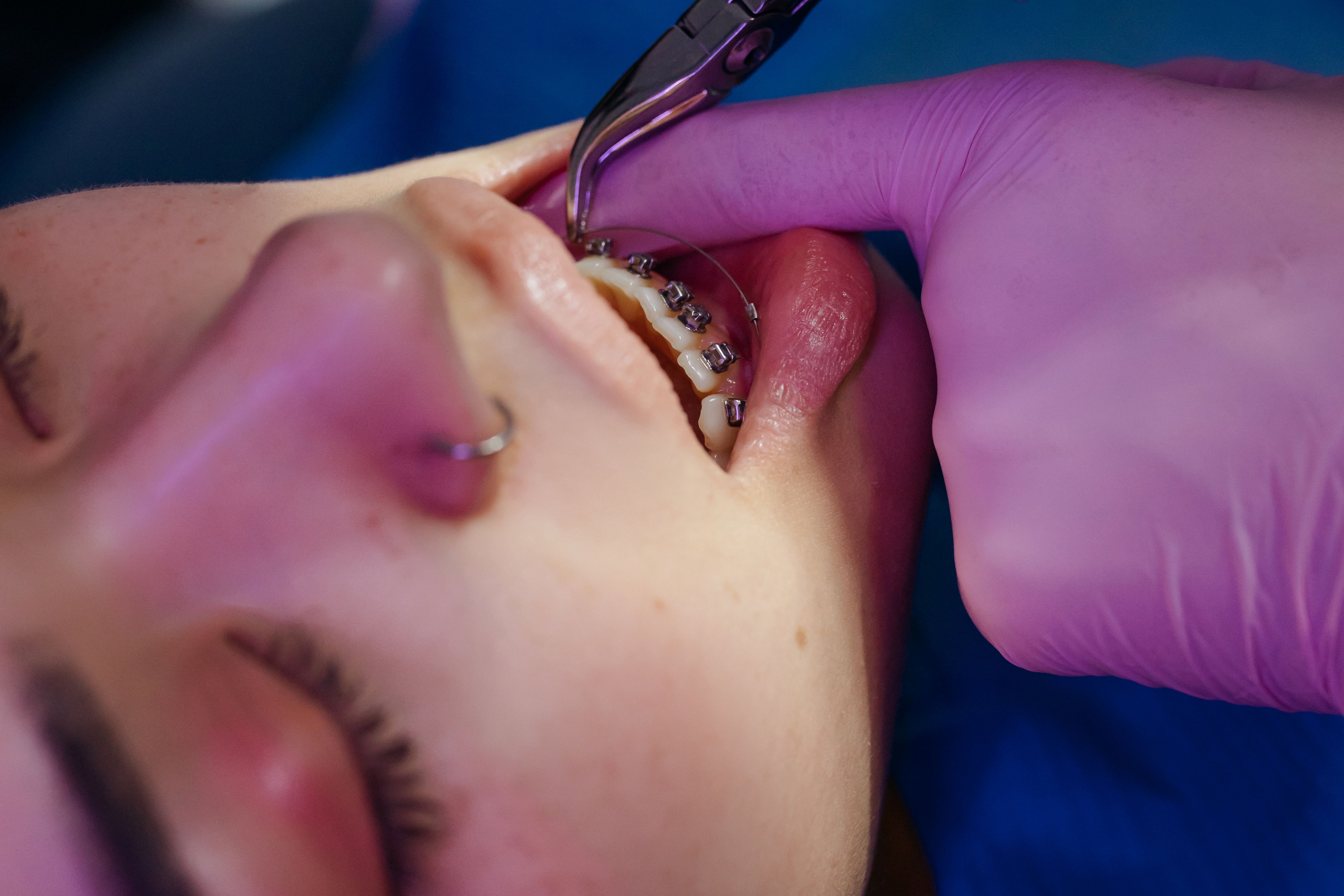
When an orthodontist mentions adding a Temporary Anchorage Device, or TAD, to your treatment plan, it is completely normal to feel a sudden wave of hesitation. The idea of placing a tiny titanium pin into your jawbone sounds intimidating, and the word screw often conjures up images of intense dental procedures.
However, the reality of getting a TAD placed is far gentler than most patients expect. TADs are micro-engineered anchorage pins designed to provide a stable, immovable point of leverage in the bone. They allow orthodontists to perform complex 3D tooth movements quickly and efficiently. Understanding what actually happens during the placement, daily wear, and removal phases can quickly eliminate fear and help you approach your appointment with peace of mind.
The Placement Procedure: What It Feels Like Step by Step
The most reassuring aspect of TAD placement is how fast and straightforward the procedure is. In almost all cases, placing a TAD takes less than five minutes from start to finish.
The procedure breaks down into three simple steps:
- Topical Numbing and Local Anesthesia: The clinical team first applies a strong topical numbing gel to the gum tissue surrounding the placement site. After a few minutes, a tiny injection of local anesthetic is administered to completely numb the immediate gum tissue and the outer layer of jawbone. Because the target area is localized to a single point, only a very small amount of numbing agent is necessary.
- Precision Insertion: Once the tissue is completely numb, the orthodontist uses a specialized hand instrument or micro-driver to gently place the self-tapping mini-screw through the gum tissue and into the outer cortical bone.
- Immediate Attachment: Because a TAD relies on immediate mechanical stability within dense outer bone rather than waiting months for tissue fusion, elastic chains, coil springs, or archwire extensions can often be attached to the TAD head during the exact same visit.
During the placement itself, you will not feel sharp pain, cutting, or pinching. Instead, you will feel mild, localized pressure as the doctor turns the driver instrument. Most patients report that getting a TAD placed is significantly easier than getting a dental cavity filled or having traditional braces brackets bonded.
What to Expect for Post-Procedure Pain and Soreness
As the local anesthetic wears off over the next two to four hours, it is normal to experience mild soreness around the insertion site.
POST-PLACEMENT COMFORT TIMELINE

Hours 0 - 4: Local anesthetic remains active. Zero pain, mild feeling of pressure.
Hours 4 - 24: Peak mild soreness in surrounding gum tissue. Easily managed with OTC pain relief.
Days 2 - 3: Soreness rapidly decreases. Gum tissue adapts to the smooth TAD collar.
Day 4+: Complete comfort. The TAD feels like a natural extension of your mouth.
The discomfort associated with a new TAD is concentrated primarily in the surrounding soft gum tissue rather than deep inside the jawbone. Jawbone tissue contains very few nerve fibers capable of sensing pain, which is why deep bone ache is extremely rare.
Most patients describe the sensation during the first 24 hours as a dull, localized ache similar to the feeling of a newly tightened archwire. Over-the-counter pain relievers, such as ibuprofen or acetaminophen, are usually more than sufficient to keep you completely comfortable. By the second or third day, most people forget the TAD is even there.
Managing Cheek and Tongue Irritation
While the bone and gum tissue recover rapidly, your cheeks, lips, or tongue must get used to having a small metallic object resting near them.
Because the head of the TAD sits slightly above the gum line so springs or rubber bands can attach to it, it can occasionally rub against the inner cheek or tongue during the first week.
To prevent or soothe irritation:
- Apply Orthodontic Relief Wax: Place a small ball of clean orthodontic wax over the head of the TAD during the first few days to create a smooth barrier for your cheek.
- Use Warm Salt Water Rinses: Swishing with warm salt water three times a day reduces tissue swelling and speeds up soft tissue healing.
- Keep the Area Spotless: Food particles caught around the TAD collar can cause localized gum inflammation, making the surrounding tissue tender. Using a soft toothbrush and an antiseptic swab keeps the area clean and calm.
To explore how these anchorage pins function alongside self-ligating brackets and shape-memory archwires, review our detailed guide on how Damon self-ligating braces work.
How TADs Accelerate Your Overall Treatment Time
Despite the slight initial adjustment period, TADs offer huge benefits that make the minor inconvenience well worth it. By providing absolute anchorage, TADs eliminate unwanted side effects on adjacent teeth, allowing your orthodontist to execute direct, linear movements from day one.
TADs accelerate your smile transformation by:
- Eliminating Unwanted Tooth Movement: In traditional mechanics, pulling one tooth back often pulls neighboring teeth forward. TADs hold the back structure 100 percent stationary so only the target teeth shift.
- Bypassing Rubber Band Compliance: Because TADs can be connected directly to target teeth using nickel-titanium springs, force is applied 24 hours a day without relying on you to remember rubber bands.
- Correcting Severe Bites Without Surgery: TADs allow orthodontists to intrude molars, fix deep open bites, and correct severe overjets that previously required invasive jaw surgery.
To understand how anchorage pins streamline complex tooth movements, explore our comprehensive overview on how TADs speed up tooth movement.
What Happens During TAD Removal?
Removing a TAD at the end of its useful life is even faster and simpler than the placement procedure. In fact, many patients are surprised by how effortlessly the pin is unthreaded.
When your orthodontist decides the desired tooth movement is complete:
- No Shots Required: Local anesthetic injections are rarely needed for removal because the surrounding bone tissue contains minimal nerve sensation, and unthreading takes only seconds.
- Quick Unthreading: The doctor inserts a matching driver tool onto the TAD head and gently turns it counterclockwise. The pin backs out smoothly within five to ten seconds.
- Mild Pressure Only: You will feel a light unscrewing pressure, but no sharp pain or discomfort.
- Rapid Gum Healing: The microscopic site left in the gum tissue heals rapidly. Because human oral tissue regenerates quickly, the tiny entry mark closes and heals completely within 24 to 48 hours without leaving a scar.
Patients considering modern orthodontic options can see how custom anchorage systems combine with aesthetic appliances by reviewing our overview of what to expect from clear aligners.
Caring for Your TAD to Ensure Comfort and Stability
Proper hygiene is the single most important factor in keeping a TAD comfortable and stable throughout your care. If plaque accumulates around the pin, bacterial tissue inflammation can soften the surrounding gum and cause the TAD to loosen prematurely.
Follow these simple care guidelines:
- Brush Gently After Meals: Use a soft-bristled toothbrush to sweep around the head and collar of the pin after eating.
- Swab with Antiseptic Mouthwash: Dip a cotton swab in a non-alcoholic antiseptic mouthwash or warm salt water and gently wipe around the base of the screw daily.
- Avoid Playing with the Pin: Do not press against the TAD with your tongue, push it with your fingers, or pick at it with toothpicks.
If you are just beginning your smile journey and want to know what to expect during your first visit, check out our step-by-step walk-through of what happens during a new patient orthodontic exam.
Frequently Asked Questions About TADs
Does getting a TAD placed require going to sleep or oral surgery?
No, TAD placement is a quick, routine in-office procedure that uses local surface numbing. You remain completely awake and comfortable, and you can resume your normal daily activities, school, or work immediately after leaving the clinic.
What should I do if my TAD feels loose?
If your TAD feels like it is wiggling or shifting when touched, contact your orthodontist. A loose TAD is usually caused by minor localized tissue inflammation or bone softening. Your doctor can easily evaluate the pin, tighten it, or relocate it to a fresh site if necessary.
Can I eat normally after getting a TAD?
Yes, you can eat normally once the local numbing wears off completely. During the first day or two, stick to softer foods like pasta, yogurt, smoothies, and eggs to avoid irritating the surrounding gums. Avoid hard or extremely sticky foods that could hook onto the TAD springs.
What happens if my cheek grows over or covers the TAD?
If tissue swells and begins to cover the head of the TAD, it usually means plaque has accumulated around the collar, causing localized swelling. Contact your orthodontist right away so they can clean the area, adjust the attachment, and guide you on proper hygiene steps to calm the tissue.
Are TADs safe for patients with metal sensitivities?
TADs are made from biocompatible, medical-grade titanium alloy, which is the same bio-inert metal used in orthopedic joint replacements and permanent dental implants. Titanium is non-toxic, highly resistant to corrosion, and exceptionally well-tolerated by human gum and bone tissue.

-1.svg)

