
The Importance of Early Orthodontic Care for Teens
Adolescence is a transformative period defined by rapid physical growth, identity formation, and increasing self-awareness. It is also the biological sweet spot for comprehensive orthodontic treatment. While children as young as seven benefit from early structural evaluations, the teenage years represent the ideal window for correcting permanent tooth alignment, aligning jaw relationships, and optimizing facial aesthetics.
In the past, getting braces was often viewed simply as a cosmetic milestone—a way to straighten a crooked smile for high school yearbooks. Modern orthodontic science, however, views adolescent treatment through a much broader clinical lens. Timely orthodontic intervention during the teenage years directly impacts long-term periodontal health, airway development, jaw joint function, and psychological well-being. By taking advantage of natural adolescent growth spurts, orthodontists can achieve structural corrections that become far more complex, invasive, and costly once bone development completes in adulthood.
The Biological Window: Why the Teen Years Are Ideal
To understand why teenage orthodontics is so uniquely effective, one must look at the underlying skeletal anatomy. During adolescence, the body undergoes significant hormonal shifts and accelerated skeletal growth. The bones of the face and jaw are actively expanding, and the suture lines connecting facial bones remain flexible and responsive to mechanical guidance.
  ADOLESCENT SKELETAL ADVANTAGE:

  Active Jaw Growth Spurts ───> Soft, Flexible Suture Lines ───> Rapid Bone Remodeling
                                                                        │
  Ideal Tooth Movement <────────────────────────────────────────────────┘
When an orthodontist places appliances on a teenager, they are not merely shifting teeth within fixed bone. They are harnessing the body’s natural growth trajectory—a specialized discipline known as dentofacial orthopedics.
- Pliable Alveolar Bone: The bone supporting teenage teeth is less dense and significantly more vascular than adult bone. This allows cellular bone remodeling (the process where osteoclasts break down bone and osteoblasts build new bone) to occur rapidly and comfortably.
- Adaptable Periodontal Ligaments: The periodontal ligaments suspending the teeth react swiftly to controlled forces, allowing roots to move into ideal positions with minimal resistance.
- Midpalatal Suture Flexibility: In teenagers, the structural suture running along the roof of the mouth has not yet fully fused. If a teenager presents with a narrow upper arch or severe crowding, appliances can gently expand the upper jaw, widening the arch to create room for all permanent teeth without surgical intervention.
Once a teenager transitions into late adolescence and young adulthood, these growth plates close, facial bones harden, and suture lines ossify. Achieving the same degree of structural arch widening or jaw repositioning in an adult often requires oral surgery or complex mechanical appliances.
Health Benefits Beyond Aesthetics
While a straight, symmetrical smile is the most visible benefit of teenage orthodontic care, the functional and preventive health advantages are far more profound. Misaligned teeth (malocclusion) are not merely a cosmetic issue; they create functional liabilities that can compromise oral health for a lifetime.
1. Superior Plaque Control and Gum Health
Crowded, overlapping, or severely rotated teeth create tight spaces, nooks, and crannies that are nearly impossible to clean effectively with standard toothbrushing and flossing. Food debris and bacterial plaque accumulate in these hard-to-reach areas, increasing the risk of early enamel demineralization, tooth decay, and localized gingivitis.
By aligning teeth into a uniform arch, orthodontic care removes these plaque traps. Straight teeth allow toothbrushes to sweep cleanly across enamel surfaces and make flossing straightforward, establishing a solid foundation for lifetime oral hygiene. To understand the long-term benefits of aligning teeth early, explore how investing in orthodontics supports lifelong dental health.
2. Prevention of Uneven Tooth Wear and Fracture
When the upper and lower jaws do not meet correctly, individual teeth bear excessive, uneven biting forces during chewing. Over time, this abnormal pressure can chip enamel, wear down biting surfaces, and lead to premature tooth fractures. Proper alignment ensures that masticatory forces are distributed evenly across the entire dental arch, preserving natural tooth structure for decades.
3. Alleviating Temporomandibular Joint (TMJ) Stress
A misaligned bite (such as a crossbite, overbite, or underbite) forces the jaw muscles to compensate during chewing and speaking. This chronic muscular straining places unnatural stress on the temporomandibular joints (TMJ)—the delicate hinges connecting the lower jaw to the skull. Correcting bite alignment during the teenage years stabilizes jaw tracking, reducing the risk of chronic jaw pain, clicking joints, and tension headaches later in life.
Psychosocial Impact: Confidence During Formative Years
The emotional and psychological benefits of teenage orthodontic care are just as critical as the physiological ones. Adolescence is a crucial stage for developing self-esteem, social confidence, and personal identity. Teenagers are uniquely sensitive to peer perception, and feeling self-conscious about misaligned or protruding teeth can lead to social anxiety, hiding smiles behind hands, or avoiding social interaction altogether.
  PSYCHOSOCIAL CYCLE OF ORTHODONTIC CARE:

  Improved Alignment ───> Enhanced Smile Aesthetics ───> Elevated Self-Esteem
                                                                  │
  Unrestricted Social Interaction <───────────────────────────────┘
Studies consistently demonstrate that teenagers who undergo orthodontic treatment experience a significant boost in self-esteem and peer comfort. When a young person feels proud of their smile, they smile more frequently, engage more openly in classrooms and social settings, and project greater confidence.
Furthermore, addressable issues like severe overjets ("buck teeth") carry a high risk of physical trauma during sports or schoolyard activities. Retracting prominent front teeth into a protected position behind the lips drastically lowers the risk of chipped or knocked-out teeth during active teenage play.
Treatment Options for Modern Teenagers
Orthodontic technology has evolved dramatically. Today’s teenagers are no longer limited to high-visibility traditional metal brackets; they have access to a versatile suite of aesthetic and comfortable appliances tailored to their active lifestyles.
Fixed Braces: Reliability and Customization
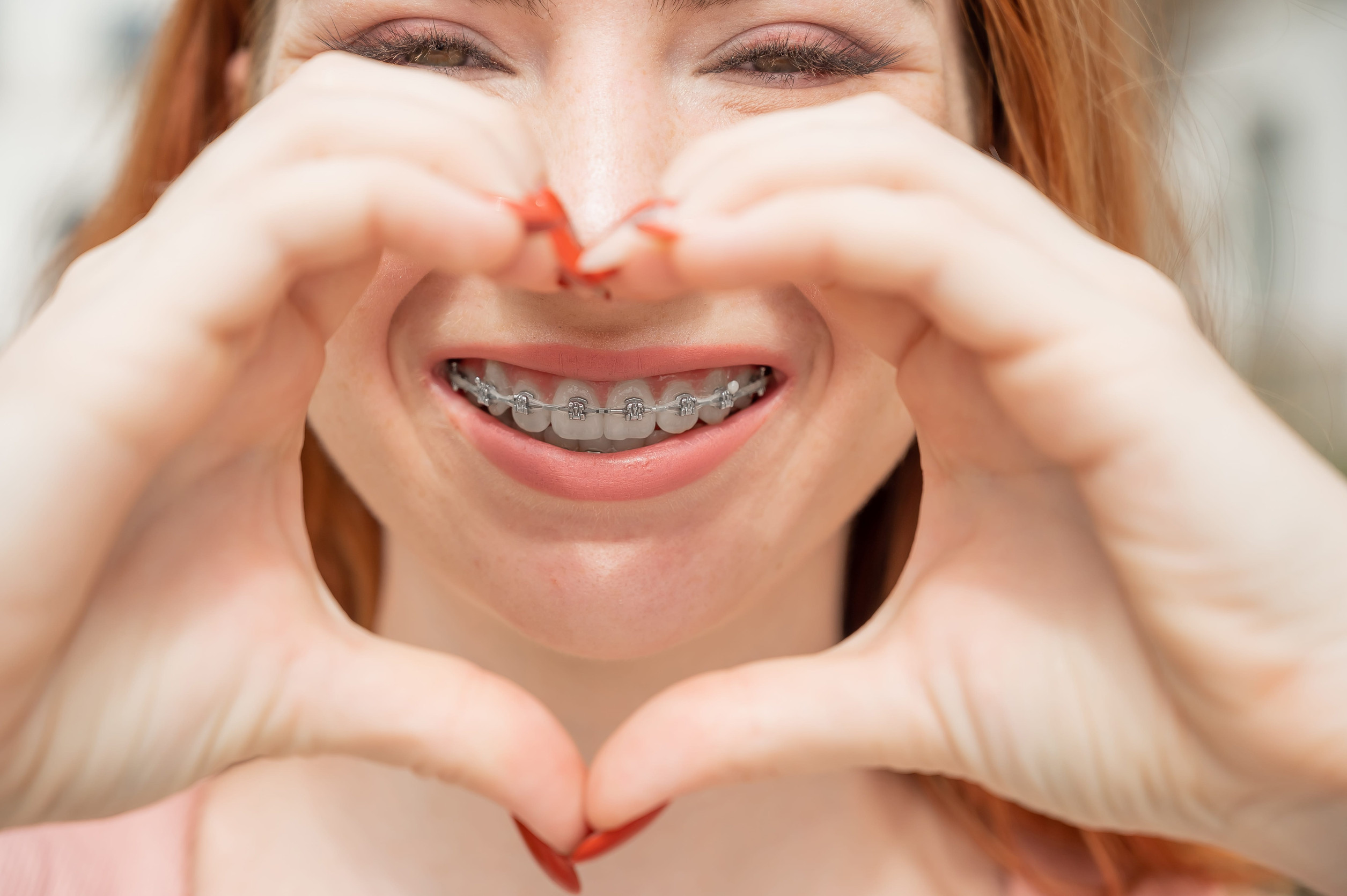
For teens requiring significant rotation, root movement, or vertical adjustment, fixed appliances (braces) remain an gold-standard solution. Modern brackets are smaller, smoother, and more comfortable than ever. Teenagers often embrace the experience by customizing their elastic ties with seasonal or team colors at each adjustment visit. For a deeper look into fixed treatment choices, read our guide on understanding metal, ceramic, and self-ligating braces options.
Clear Aligners: Discrete Flexibility
For self-motivated teenagers, clear aligner systems offer a discreet alternative. Aligners can be temporarily removed for sports, band practice, public speaking, or eating hard and sticky foods. Built-in compliance indicators (tiny dots that fade with proper wear) help parents and orthodontists ensure the trays are being worn for the required 20 to 22 hours per day. To discover how clear aligners fit into an adolescent routine, explore our detailed resource on what to expect from clear aligners.
Life During Teen Orthodontics: Navigating Daily Routine
Starting orthodontic treatment is an adjustment, but with proper habits, teenagers adapt quickly to their new routine.
Hygiene and Appliance Care
Fixed braces require a bit of extra attention during daily oral care. Food particles easily become trapped around brackets and under archwires. Teenagers should be equipped with specialized hygiene tools, such as interdental brushes, water flossers, and orthodontic threaders, to clean thoroughly around their appliances.
For clear aligners, maintaining proper storage and hygiene is equally important to avoid warping or staining the trays. Reviewing proper clear aligner cleaning and storage practices helps teens keep their treatment hygienic and on schedule.
Dietary Adjustments
Teenagers wearing fixed braces must avoid hard, sticky, or overly chewy foods—such as popcorn, whole apples, hard candies, and chewing gum—that can snap brackets or bend delicate archwires. A broken bracket stalls treatment progress and necessitates emergency repair visits.
Protecting Smiles During Sports
Active teenagers participating in contact sports (such as football, basketball, soccer, or martial arts) must wear an orthodontic mouthguard. Unlike standard boil-and-bite guards, specialized orthodontic mouthguards fit comfortably over brackets, protecting both the teeth and the surrounding soft cheek tissue from blunt impact.
The Role of Early Evaluation and Phase I Treatment
While adolescent treatment typically begins between ages 11 and 14 (when most permanent teeth have erupted), evaluating children earlier lays the groundwork for seamless teenage care.
The American Association of Orthodontists recommends an initial evaluation by age 7. Early screening allows orthodontists to identify underlying jaw growth discrepancies, severe crowding, or habitual issues (like thumb sucking) early on. In some cases, a brief Phase I interceptive treatment during early childhood expands the jaw or holds space, making subsequent teenage treatment significantly shorter, simpler, and less invasive. Parents interested in early structural planning can consult our guide to early orthodontic evaluation for children.
Long-Term Stability: The Retainer Phase
The removal of braces or the completion of clear aligner trays is a moment of celebration, but it is not the final step of orthodontic care. Once teeth have shifted into their ideal positions, the surrounding bone and elastic periodontal fibers require time to stabilize and adapt.
Without proper retention, teeth naturally attempt to drift back toward their original positions—a process known as orthodontic relapse. Teenagers must understand that wearing custom retainers as directed by their orthodontist is an essential lifelong habit to safeguard their hard-earned smile.
Conclusion: A Lifetime Investment in Health and Happiness
Investing in orthodontic care during the teenage years is one of the most impactful gifts a parent can offer a growing child. By capitalizing on natural adolescent growth spurts, orthodontic treatment achieves ideal bite alignment, protects periodontal health, and builds robust self-confidence during a critical period of social development.
Whether choosing traditional braces or modern clear aligners, early orthodontic intervention sets teenagers up for a lifetime of functional oral health and bright, confident smiles.

-1.svg)

