
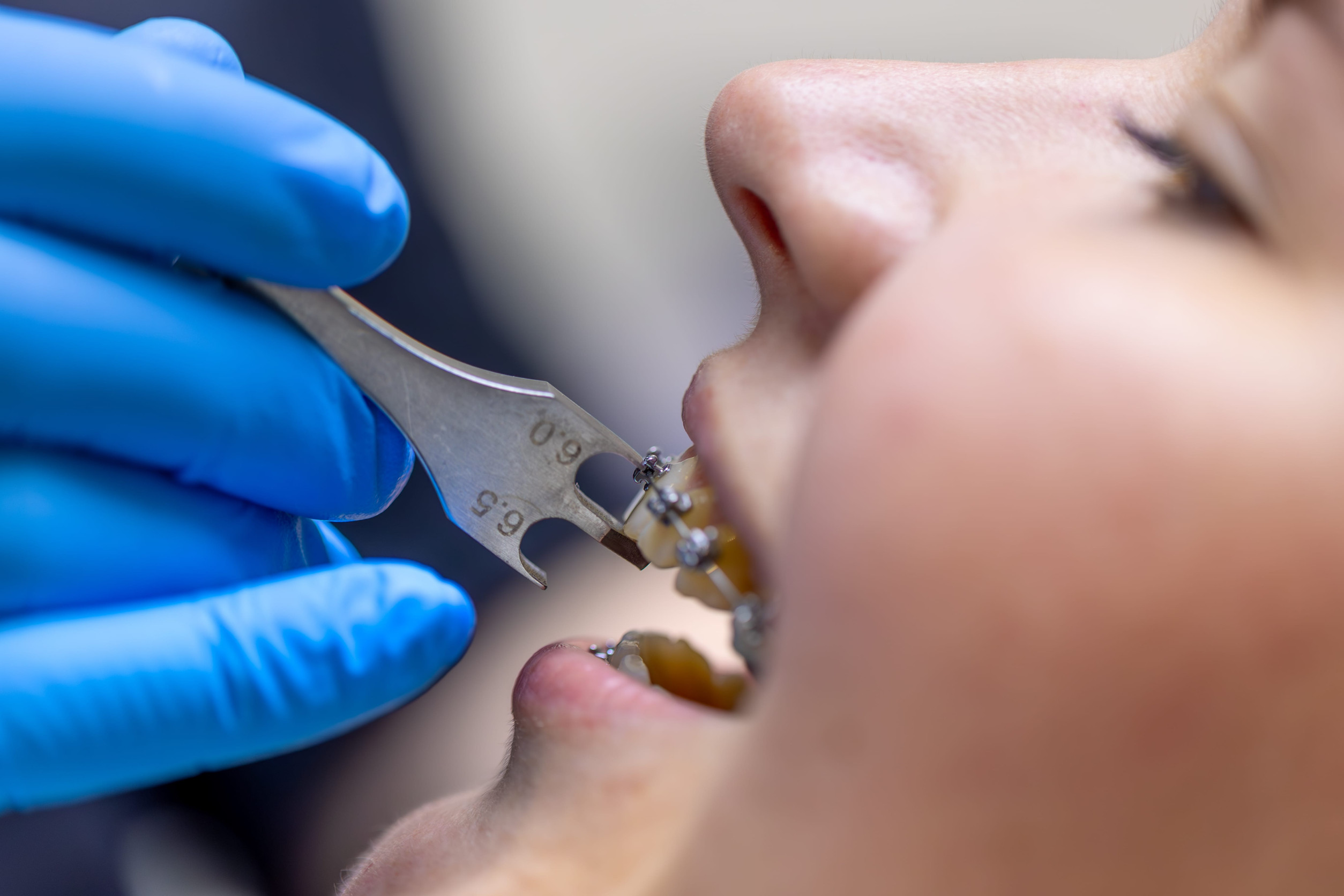
When people think of dental braces, the first image that comes to mind is usually the shiny metal or clear brackets glued to each tooth. While brackets get most of the attention (and serve as the mounting point for colorful elastic bands), they are actually passive players in the biological transformation of your smile. Brackets function merely as handles attached to your teeth. The real muscle behind your orthodontic treatment—the engine that actually generates force and drives tooth movement—is the orthodontic archwire.
Running horizontally across your teeth through the slot of every bracket, the archwire is a carefully engineered piece of high-tech metal alloy. Without the archwire, brackets would simply sit on your enamel doing nothing at all. Understanding how this small wire exerts gentle pressure, redirects dental roots, and transforms jaw function clarifies why orthodontic treatment works so predictably.
The Core Mechanism: How an Archwire Delivers Force
To understand how an archwire works, imagine bending a wooden ruler or a plastic spoon. When you flex it out of shape, the material resists and tries to snap back into its original, straight form. Orthodontic archwires operate on a refined version of this exact mechanical principle.
An archwire is pre-formed by the manufacturer (and customized by your orthodontist) into a smooth, perfect parabolic arch—the ideal shape for a healthy, fully aligned human jaw. When an orthodontist snaps or ties this archwire into brackets on crooked, overlapping, or rotated teeth, the wire is forced to bend and flex to match the current positions of those misaligned teeth.
  Step 1: Unbent Archwire (Ideal Arch Shape)  ─────>  ( U-shaped Curve )
  Step 2: Tied into Crooked Brackets          ─────>  [ Bent & Flexed Wire ]
  Step 3: Wire's "Elastic Memory" Triggers     ─────>  Exerts continuous, gentle push/pull force
  Step 4: Tooth & Bone Remodel                ─────>  Teeth shift until wire returns to ideal shape
Because the metal alloy has elastic properties, it constantly tries to unbend itself back to its original parabolic shape. As the wire works to recover its starting form, it applies continuous, gentle, controlled force to the attached brackets. The brackets transfer this kinetic energy to the tooth roots, compressing the periodontal ligament on one side and stretching it on the other. This biological pressure triggers localized bone resorption and deposition, allowing the teeth to move safely into new alignment.
To explore how brackets, wires, and bands interface to shift teeth safely, consult our comprehensive guide on how dental braces work to align teeth.
The Material Evolution: High-Tech Metallurgy in Your Mouth
Not all archwires are created equal. Throughout an orthodontic treatment plan, your orthodontist will switch out your archwires several times. Each replacement uses a different metal alloy and thickness to accomplish a specific movement phase. Modern orthodontics relies heavily on specialized materials science.
+---------------------------------------------------------------------------------------------------------+
|                                  TYPES OF ORTHODONTIC ARCHWIRES                                        |
+-------------------+---------------------------------+---------------------------------------------------+
| Wire Material     | Primary Properties              | Main Treatment Phase                              |
+-------------------+---------------------------------+---------------------------------------------------+
| Nickel-Titanium   | High flexibility, shape memory, | Phase 1: Initial levelling, un-crowding,          |
| (NiTi)            | temperature activation          | and early alignment                               |
+-------------------+---------------------------------+---------------------------------------------------+
| Stainless Steel   | High rigidity, stiffness,       | Phase 2: Closing space, torque control,           |
|                   | low friction                    | and heavy structural corrections                  |
+-------------------+---------------------------------+---------------------------------------------------+
| Beta-Titanium     | Moderate flexibility,           | Phase 3: Fine-tuning, individual root tipping,    |
| (TMA)             | highly formable                 | and final detailing                               |
+-------------------+---------------------------------+---------------------------------------------------+
1. Nickel-Titanium (NiTi) Wires: The Shape-Memory Marvels
Developed originally by NASA for outer space applications, Nickel-Titanium (NiTi) alloys transformed modern orthodontics. NiTi wires possess two incredible properties: superelasticity and shape memory.
Even if a patient's teeth are severely crowded and twist the wire into severe angles, a NiTi wire will not stay permanently bent. Instead, it maintains a continuous, gentle push as it gradually snaps back into shape. Some advanced NiTi wires are even heat-activated: they remain soft and flexible at room temperature (making them easy for the orthodontist to install) and harden to exert force only after warming up to body temperature inside your mouth.
2. Stainless Steel Wires: The Heavy-Duty Workhorses
As teeth straighten out, high flexibility becomes less desirable than structural rigidity. That is when your orthodontist switches to stainless steel wires. Stainless steel archwires are strong, stiff, and unyielding. They act as rigid tracks along which individual teeth or blocks of teeth can be slid to close gaps or stabilize jaw relationships.
3. Beta-Titanium (TMA) Wires: The Fine-Tuning Specialists
Used primarily in the final stages of treatment, Beta-Titanium wires offer a balance between the soft elasticity of NiTi and the stiff rigidity of stainless steel. They allow orthodontists to make intricate, custom bends in the wire to adjust individual tooth positions, root angles, and micro-alignments before removing the appliances.
The Three Phases of Archwire Progression
An orthodontic journey is a carefully staged progression. Putting a thick, rigid wire on crooked teeth at day one would overload the periodontal tissues, cause unnecessary pain, and potentially damage tooth roots. Instead, orthodontists follow a phased wire sequence.
Phase 1: Leveling and Aligning (Light, Flexible Wires)
The primary goal during the initial months of treatment is to untangle crowded teeth, level uneven heights, and bring all brackets into a shared plane. Orthodontists start with thin, round NiTi wires. Because thin NiTi wires exert extremely low forces over wide ranges of deflection, they are comfortable for the patient and gentle on surrounding bone tissue. To learn more about navigating these early stages, read our overview of understanding metal, ceramic, and self-ligating options.
Phase 2: Space Closure and Bite Correction (Thick, Rectangular Wires)
Once the teeth are reasonably straight, the orthodontist transitions from round wires to rectangular wires. A rectangular archwire fits snugly into the rectangular slot of each bracket, giving the orthodontist 3D control over both the crown (the visible tooth) and the root buried in the jawbone.
During this middle stage, rigid stainless steel wires are used to:
- Slide front teeth backward to close extraction spaces or gaps.
- Correct overbites, underbites, and crossbites when combined with rubber bands (elastics).
- Control root torque, ensuring roots remain safely centered inside healthy alveolar bone.
Phase 3: Detailing and Settlement (Custom-Bent Wires)
In the final months, the orthodontist uses flexible yet formable wires (like TMA or light steel) to make tiny millimeter-level adjustments. These bends fix tiny height mismatches, adjust bite contact points, and ensure your upper and lower teeth mesh like gears in a clock.
Archwire Maintenance: Friction, Ligatures, and Adjustments
An archwire cannot move teeth on its own; it requires a secure mechanical connection to each bracket. How that connection is made impacts how comfortably and efficiently your treatment progresses.
Elastic Ties vs. Self-Ligating Clips
In traditional braces, small rubber rings called elastomeric ligatures (the colorful bands kids and teens love) hold the archwire firmly inside each bracket slot. While fun, these elastic bands create mechanical friction as the wire tries to slide through the brackets during tooth movement.
Modern self-ligating braces technology replaces rubber bands with built-in sliding doors or clips built directly into the bracket. This mechanism holds the archwire securely with significantly lower friction, allowing teeth to slide more freely along the archwire and often reducing treatment discomfort.
What Happens During "Tightening" Appointments?
Patients often speak of going to the orthodontist to get their braces "tightened". In reality, orthodontists rarely stretch or tighten anything. During an adjustment appointment, the orthodontist will typically:
- Remove the elastic ligatures or open the bracket doors.
- Remove the current archwire.
- Inspect tooth progress and check for un-rotated roots.
- Insert a thicker, stiffer, or differently shaped archwire to initiate the next phase of movement.
The "tight" feeling you experience for a day or two after an adjustment is simply your periodontal ligaments reacting to the new, slightly higher level of continuous force delivered by the fresh archwire.
Common Archwire Troubleshooting
Because archwires are dynamic components under constant tension, they occasionally create minor issues between appointments. Knowing how to handle these everyday occurrences keeps your treatment on track:
Poky Wire Ends
As crowded teeth straighten out, slack in the archwire gets pushed toward the back of your mouth. Eventually, the excess wire may extend past the final molar bracket and poke your cheek.
- Quick Fix: Place a small pea-sized ball of orthodontic relief wax directly over the sharp tip. Contact your orthodontic office so they can quickly snip the excess wire with specialized flush-cut pliers.
Slipping or Unseated Wires
In early treatment phases, thin NiTi wires are extremely flexible and can occasionally slip out of the back molar tube while chewing tough foods.
- Quick Fix: Use clean tweezers or eyebrow tweezers to carefully grasp the wire and slide it back into the bracket slot. If it causes discomfort, cover it with wax until your office appointment.
Distorted or Bent Wires
Chewing hard, crunchy, or sticky foods (like ice, nuts, or hard candy) can physically bend even stainless steel wires. A bent archwire will push teeth in the wrong direction.
- Quick Fix: Avoid forbidden foods strictly. If you notice a visible kink in your wire, call your orthodontist promptly to have it replaced before unwanted tooth movement occurs.
Archwires Across Different Age Groups
While the physical behavior of metal alloys remains constant, the physiological bone environment surrounding the archwire changes with age.
Teenage Patients
Because adolescents have active cell metabolism and lower bone density, their jawbone responds quickly to the forces exerted by archwires. To explore how wire-driven movement fits into a adolescent lifestyle, review our guide on understanding braces for teens.
Adult Patients
Adult bone is denser and less vascularized, meaning cellular osteoclast activity takes longer to initiate. Orthodontists adjust for this mature biology by using specialized, ultra-light NiTi archwires for extended periods to prevent hyalinization (tissue compression) and protect periodontal bone levels.
Summary: The Unsung Hero of Orthodontics
While brackets receive the spotlight, the humble archwire is the true engine of orthodontic change. By leveraging principles of metallurgy, biomechanics, and tissue remodeling, these high-tech wires transform chaotic alignment into a functional, harmonious, and beautiful smile.
Whether you are embarking on treatment with traditional metal brackets, aesthetic ceramic options, or frictionless self-ligating systems, appreciating the work happening along your archwire helps you navigate your orthodontic journey with complete confidence!

-1.svg)

