
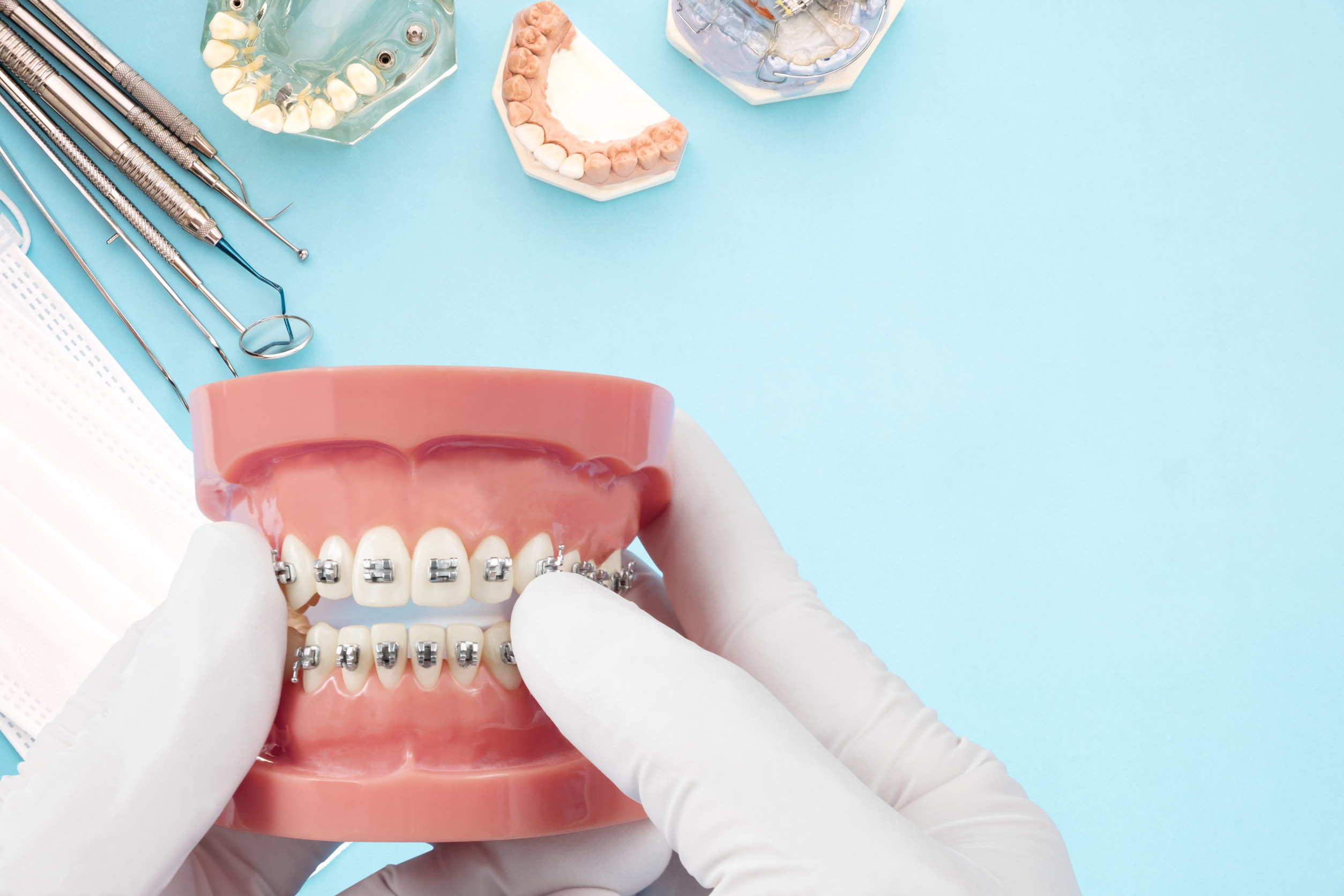
When patients begin orthodontic treatment with braces, they often focus on the brackets bonded to their teeth. However, brackets are merely passive anchors glued to the enamel. The actual engine that drives tooth movement, reshaping the dental arch and correcting complex bite relationships, is the orthodontic archwire.
Throughout your orthodontic journey, you will notice your doctor replacing your archwires during routine adjustment appointments. You may wonder why one wire cannot simply remain in place from start to finish. The answer lies in advanced materials science and mechanical engineering. Orthodontists strategically switch wire materials, shapes, and thicknesses across different treatment stages. Two of the most critical metals utilized in modern braces are Nickel-Titanium, commonly known as NiTi, and Stainless Steel. Each material possesses distinct physical properties designed to solve specific biological challenges during your smile transformation.
Understanding Archwire Mechanics and Elastic Memory
To appreciate why different wire alloys are necessary, it helps to understand how orthodontic wires transfer mechanical force to human bone tissue. When an archwire is engaged into brackets attached to crooked teeth, the wire flexes out of its ideal parabolic shape. As the wire attempts to spring back into its pre-formed shape, it exerts continuous, gentle pressure against the teeth.
This mechanical pressure compresses the periodontal ligament on one side of the tooth root while stretching it on the other. This biological signal triggers localized bone resorption, where osteoclast cells clear away bone in the direction of movement, and bone deposition, where osteoblast cells build new bone behind the root.
Applying the correct amount of force is crucial. If a wire applies too much rigid force early in treatment, it can pinch blood vessels in the periodontal ligament, causing discomfort and stalling tooth movement. Conversely, if a wire is too flexible during later phases, it cannot withstand the heavy pressure required to close extraction spaces or shift entire jaw relationships. This balance is why orthodontists transition from flexible alloys to rigid metals as your teeth align.
Nickel-Titanium (NiTi) Archwires: The High-Flexibility Starters
Nickel-Titanium wires revolutionized modern orthodontics. Developed initially through military research and adapted for specialized medical use, NiTi is an exotic metal alloy composed of approximately equal parts nickel and titanium. This unique combination endows NiTi archwires with two remarkable mechanical qualities: superelasticity and shape memory.
Superelasticity and Constant Low Force
Unlike conventional metals that stay permanently bent when deformed past a certain point, superelastic NiTi can be twisted into extreme angles without permanently warping. Once engaged into brackets on severely crowded or rotated teeth, a NiTi wire delivers a continuous, gentle force over a broad range of movement. This continuous low-pressure delivery moves teeth efficiently while keeping patient discomfort to a minimum during the opening stages of care.
Shape Memory and Thermal Activation
Some advanced NiTi archwires feature thermal shape memory. These wires remain pliable and soft at room temperature, making them remarkably easy for the clinical team to engage into crooked brackets. Once placed inside the mouth, the wire warms to body temperature, triggering a structural phase transformation inside the metal. The wire hardens and actively works to recover its original, perfectly aligned arch form.
Because of these properties, NiTi archwires serve as the primary workhorse during the first phase of treatment. To learn more about how specialized initial wires interact with low-friction bracket designs, explore our detailed overview of Damon self-ligating braces mechanics.
Stainless Steel Archwires: The High-Rigidity Stabilizers
While NiTi archwires excel at unbending and leveling crooked teeth, their extreme flexibility becomes a drawback during middle and final treatment phases. When an orthodontist needs to close gaps left by extracted teeth, adjust bite relationships, or torque tooth roots inside dense jawbone, a flexible wire would simply bow or distort under pressure. This is where stainless steel archwires become indispensable.
Stainless steel is an alloy composed of iron, carbon, chromium, and nickel. In orthodontics, stainless steel wires are valued for their high stiffness, structural rigidity, and low surface friction.
High Rigidity and Arch Stability
Stainless steel wires resist bending under heavy forces. They act as a rigid structural track along which teeth can slide safely. When rubber bands or coil springs are used to pull front teeth backward or shift molars forward, a thick stainless steel archwire holds the arch shape steady, preventing unwanted tipping or arch collapse.
Low Friction for Space Closure
Because stainless steel has a smooth, polished surface finish, it generates minimal friction inside the bracket slots. This low-friction surface allows teeth to slide smoothly along the wire during space closure.
The Sequential Wire Progression: Step-by-Step Movement
Orthodontic treatment follows a carefully orchestrated sequence. Swapping wires is not a random decision; it represents a planned transition through three distinct clinical phases.
PHASE 1: LEVELING & ALIGNING
Initial Wire: Thin, Round NiTi
Clinical Goal: Un-crowd teeth, rotate turned roots, level bite planes.

PHASE 2: SPACE CLOSURE & BITE CORRECTION
Middle Wire: Rectangular Stainless Steel
Clinical Goal: Close gaps, guide root torque, correct overbites/underbites.

PHASE 3: DETAILING & SETTLEMENT
Final Wire: Flexible Beta-Titanium or Light Steel
Clinical Goal: Micro-adjust individual tooth heights, interlock final bite.
Phase 1: Leveling and Aligning (Thin, Round NiTi Wires)
Treatment almost always begins with thin, round NiTi wires. A round cross-section allows the wire to sit loosely within the rectangular bracket slot, delivering minimal friction and allowing crowded teeth to untangle smoothly.
Phase 2: Structural Control and Space Closure (Thick, Rectangular Stainless Steel Wires)
Once teeth are reasonably straight, the orthodontist transitions from round wires to rectangular wires. A rectangular wire fills the rectangular slot of the bracket completely. This full engagement gives the doctor three-dimensional control over tooth movement, allowing them to adjust root angles (torque) as well as crown positions. Stainless steel is chosen here to provide the rigid support needed for heavy elastic wear and gap closure.
Phase 3: Detailing and Settlement (Beta-Titanium or Braided Wires)
In the final months of treatment, the doctor fine-tunes individual tooth positions. They may use specialized alloys like Beta-Titanium (also called TMA) or multi-strand braided stainless steel wires. These materials allow the doctor to place precise, permanent bends in the wire to adjust micro-alignments before appliances are removed.
Comparing NiTi and Stainless Steel Archwires
Understanding the structural differences between these two primary wire types highlights why both are essential to a successful outcome.
Wire Care and Maintenance Between Appointments
Because archwires are actively working components under continuous mechanical tension, taking proper care of them between office visits ensures your treatment stays on schedule.
- Avoid Hard and Sticky Foods: Chewing ice, hard candies, nuts, or sticky caramel can bend stiff stainless steel wires or dislodge flexible NiTi wires from molar brackets. A bent wire will push teeth in the wrong direction.
- Manage Poky Wire Tips: As crowded teeth straighten out along a NiTi wire, extra wire slack gets pushed toward the back of the mouth. If a wire end pokes your cheek, apply a small piece of orthodontic relief wax over the sharp tip and contact your clinic for a quick wire trim.
- Maintain Excellent Oral Hygiene: Plaque accumulation around archwires can cause gum inflammation, which increases friction and slows down tooth movement. Brush after every meal and use interdental brushes to keep wires clean.
Proper care is just as essential for growing adolescents as it is for adults. Parents interested in adolescent care protocols can explore our resource on the importance of early orthodontic care for teens.
Frequently Asked Questions About Orthodontic Archwires
Why do my teeth feel sore after a new archwire is placed?
Soreness after a wire change occurs because the new wire applies fresh mechanical force to the periodontal ligaments supporting your teeth. This pressure triggers a temporary biological inflammatory response that allows bone remodeling to occur. The sensitivity typically peaks within 24 to 48 hours and fades within a few days.
How often will my orthodontist change my archwire?
Archwires are typically changed or adjusted every six to ten weeks, depending on the type of brackets used and your specific stage of treatment. Early NiTi wires remain active for longer periods, while later stainless steel wires may be adjusted or swapped more frequently to guide detailed movements.
What should I do if my archwire pops out of the back bracket?
If a flexible initial wire slips out of a back molar tube, you can often use a clean pair of tweezers to gently guide the wire back into the bracket slot. If you cannot reinsert it, cover the loose end with orthodontic wax to protect your cheek and call your orthodontist to schedule a brief repair appointment.
Can you be allergic to nickel in orthodontic archwires?
While true nickel allergies exist, localized oral allergic reactions to nickel archwires are extremely rare because saliva buffers the tissue. However, if a patient has a severe, documented nickel allergy, orthodontists can utilize nickel-free alternatives such as Titanium-Molybdenum Alloy (TMA) or pure stainless steel wires throughout treatment.
Does a thicker archwire mean my treatment is almost finished?
Moving to a thicker, rectangular archwire indicates that your treatment has progressed from initial leveling into structural bite alignment and space closure. While it marks significant progress, it does not necessarily mean treatment is almost finished, as bite correction and root torque often require several months on heavy wires to ensure long-term stability.

-1.svg)

