
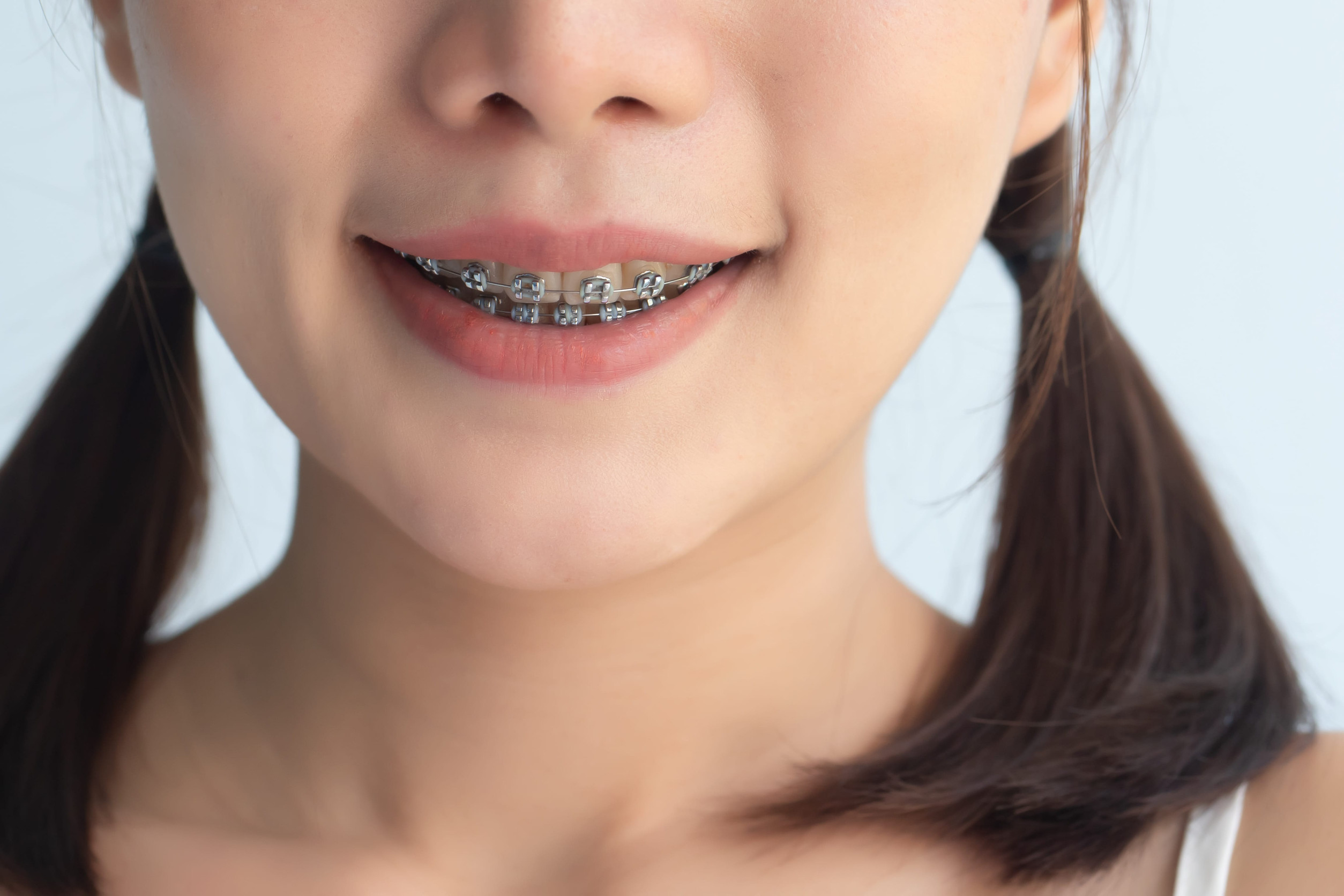
For generations, getting braces meant choosing colorful rubber bands to secure a metal wire across a row of brackets. While those colorful ties remain a popular customization option for kids and teens, the mechanics behind traditional braces come with structural friction. Every time a rubber band grips an archwire, it creates mechanical resistance. To overcome that resistance and shift teeth into alignment, orthodontists historically had to apply higher levels of pressure, leading to frequent tightening visits and localized soreness.
Modern orthodontic engineering has introduced a significantly more efficient alternative: self-ligating bracket systems. Among these, the Damon System stands out as a leading innovation. By eliminating elastic ligatures entirely and replacing them with built-in sliding doors, Damon braces transform how mechanical force is transferred to tooth roots. Understanding the biomechanics of self-ligating brackets reveals why this low-friction approach offers patients a smoother experience with fewer routine adjustment appointments.
The Core Concept: What Does Self-Ligating Actually Mean?
To understand how Damon braces work, it helps to break down the word ligation. In clinical terms, ligation simply means binding or tying something in place. In traditional orthodontics, the orthodontist glues a bracket to each tooth and places a horizontal archwire through the center slot of those brackets. To prevent the wire from popping out, tiny rubber rings called elastomeric ligatures (or small stainless steel tie wires) are wrapped around the corners of every single bracket.
In a traditional setup, the rubber band presses the wire firmly against the back of the bracket slot, creating notable mechanical friction.
A self-ligating bracket, by contrast, binds the archwire automatically using its own built-in mechanism. Instead of relying on external rubber bands, Damon brackets feature a patented, micro-engineered sliding door. Once the orthodontist places the archwire into the bracket slot, the built-in door slides shut, encasing the wire securely inside a smooth, protective channel.
By removing elastic ties from the equation, Damon braces change the physical dynamic between the wire and the bracket. To learn more about how specialized self-ligating appliances compare to standard metal or clear brackets, explore our comprehensive overview of Damon braces services.
Passive vs. Active Self-Ligation: The Damon Difference
Not all self-ligating braces function in the exact same manner. Within orthodontics, self-ligating systems are divided into two primary categories: active and passive.
Active Self-Ligating Systems
Active systems utilize a spring-loaded metal clip that actively presses down against the archwire. While this spring pressure can offer precise control during the final detailing stages of alignment, it continues to exert active friction against the wire during early treatment phases when teeth need room to slide smoothly.
Passive Self-Ligating Systems (The Damon Approach)
The Damon System utilizes a passive sliding mechanism. The built-in door does not press firmly against the archwire. Instead, it creates a smooth, enclosed four-walled tube around the wire, leaving open space so the wire can slide freely without binding or catching.
Because the channel remains slightly larger than the wire during initial leveling stages, the archwire is free to move back and forth with virtually zero friction. This subtle mechanical difference allows teeth to respond to light biological forces much faster than when bound by tight rubber bands or active clips.
Why Lower Friction Leads to Fewer Adjustment Appointments
The most common question prospective orthodontic patients ask is how often they will need to visit the office for adjustments. Traditional braces typically require check-ups every four to six weeks. With Damon self-ligating braces, appointment intervals are frequently extended to every eight to ten weeks, or even longer depending on the treatment phase.
This reduction in office visits is driven by three main biological and physical factors:
1. Continuous, Uninterrupted Wire Movement
With traditional braces, the rubber ties that hold the wire in place slowly degrade over time. Inside the mouth, moisture, temperature changes, and chewing forces cause elastic ties to lose their tension within a few weeks. As the elastic stretches, the wire loses its ability to deliver effective force, requiring the patient to return to the clinic so the orthodontist can replace the old ties with fresh, tight ones.
Damon braces do not suffer from elastic degradation. Because the stainless steel sliding door never loses its shape or tension, the archwire continues to exert continuous, low-level force over an extended period. Because the system remains mechanically active for weeks longer than traditional ties, patients can safely wait longer between progress checks.
2. Working with Biology: High-Tech Shape-Memory Wires
The passive design of Damon brackets works in synergy with advanced space-age metallurgy. During the initial phases of alignment, orthodontists pair Damon brackets with copper-nickel-titanium (CuNiTi) archwires. These high-tech wires are thermal-active, meaning they remain soft at room temperature but activate to deliver gentle, continuous pressure once warmed by body heat inside the mouth.
Because the passive bracket door allows the wire to slide freely without binding, these shape-memory wires can gradually untangle severely crowded teeth without overloading the supporting periodontal ligament or jawbone tissue. To see how specialized wires and self-ligating brackets integrate into custom treatment plans, read our guide on understanding metal, ceramic, and self-ligating braces options.
3. Biological Efficiency Over Force Intensity
A long-held belief in traditional dentistry was that applying heavier force moved teeth faster. Modern cellular biology has proven the opposite.
When heavy forces are applied to a tooth, the periodontal ligament gets pinched tightly against the surrounding alveolar bone, causing a temporary loss of local blood supply (hyalinization). The body must then pause and send specialized cells to clear away damaged tissue before bone remodeling can occur.
Damon self-ligating braces use significantly lighter initial forces. Because the blood vessels in the periodontal ligament are not crushed, natural capillary blood flow remains intact. Osteoclasts and osteoblasts, which are the cells responsible for breaking down and rebuilding bone tissue, operate continuously. Teeth move smoothly and steadily, eliminating the need for frequent manual tightening.
Additional Advantages of the Damon System
While fewer office visits and extended adjustment intervals are major advantages for busy adults and families, the benefits of Damon self-ligating braces extend into hygiene, comfort, and broad structural development.
Enhanced Oral Hygiene
Elastic ties are notorious plaque traps. The porous rubber material absorbs saliva, collects food debris, and provides an ideal surface for bacterial accumulation. This makes brushing and flossing around traditional brackets challenging, increasing the risk of enamel demineralization (white spot lesions) and gingivitis.
Damon brackets remove rubber ties entirely. The smooth, contoured metallic or clear surfaces are significantly easier to sweep clean with a standard toothbrush or interdental brush. Keeping teeth clean throughout treatment protects enamel and ensures gum tissue stays healthy.
Arch Expansion and Airway Health
Another notable aspect of the Damon System philosophy is its ability to produce broad, natural smile arches. Because light biological forces work in harmony with the facial muscles, the system can help expand narrow arches without always resorting to painful palatal expanders or tooth extractions.
A wider upper arch provides more room for the tongue, expands the oral cavity, and supports open nasal airways. To discover how broad-arch orthodontic expansion connects to breathing and sleeping quality, read our article exploring the link between orthodontics and sleep apnea treatment.
Improved Comfort for Patients
Traditional braces adjustments often left patients feeling sore for a few days because fresh rubber ties delivered a sharp spike in pressure. Because Damon braces utilize light, continuous force curves, patients report significantly less post-adjustment discomfort. Furthermore, the absence of sharp wire ties or bulky elastics means less friction against cheeks and lips.
Aesthetic Options: Damon Clear
For image-conscious teenagers and adult professionals who want the performance of self-ligating mechanics without visible metal, the system offers Damon Clear.
Unlike traditional ceramic brackets that use clear rubber bands (which quickly turn yellow or stain when drinking coffee or tea), Damon Clear brackets are made of solid, stain-resistant polycrystalline alumina. The entire bracket, including the sliding door, is virtually invisible and completely resistant to discoloration throughout treatment.
Combining clear self-ligating brackets with discreet archwires provides an aesthetic treatment option that moves teeth with the speed and control of metal braces. Patients weighing aesthetic choices can explore how discreet options compare by reviewing our detailed guide on what to expect from clear aligners and modern braces.
Is the Damon System Right for Everyone?
While Damon self-ligating braces offer clear advantages in appointment frequency, hygiene, and comfort, success in orthodontics ultimately relies on accurate diagnosis and custom treatment planning. Self-ligating brackets are a tool in the hands of an experienced orthodontist, not a magic cure-all.
During an initial consultation, the doctor uses digital 3D scans and panoramic X-rays to assess jaw relationships, bone density, and tooth root angles. Based on these diagnostics, the orthodontist determines whether passive self-ligation, clear aligners, or traditional appliances will deliver the most stable and aesthetic result for your specific anatomy.
For families considering orthodontic options for younger children, evaluating structural jaw growth early remains vital. Learn how early diagnostics lay the ground for streamlined teenage treatment by reading our guide to early orthodontic evaluation for children.
Summary: A Smarter Approach to Straightening Teeth
Damon braces represent a significant step forward in orthodontic engineering. By substituting binding elastic ties with a patented, low-friction sliding door mechanism, the Damon System achieves tooth movement through gentle, biologically sound forces.
For patients, this passive self-ligating mechanism delivers clear, real-world benefits:
- Fewer Office Visits: Extended adjustment intervals fit easily into busy school and work schedules.
- Shorter Appointments: Changing archwires is fast and simple, taking only seconds per arch.
- Greater Overall Comfort: Gentle continuous forces reduce pressure spikes and soreness.
- Better Oral Hygiene: Eliminating rubber bands makes brushing and flossing simpler, keeping gums healthy.
By aligning mechanical design with natural human biology, Damon self-ligating braces offer an efficient, comfortable, and discreet path to a healthy, lifelong smile.

-1.svg)

