
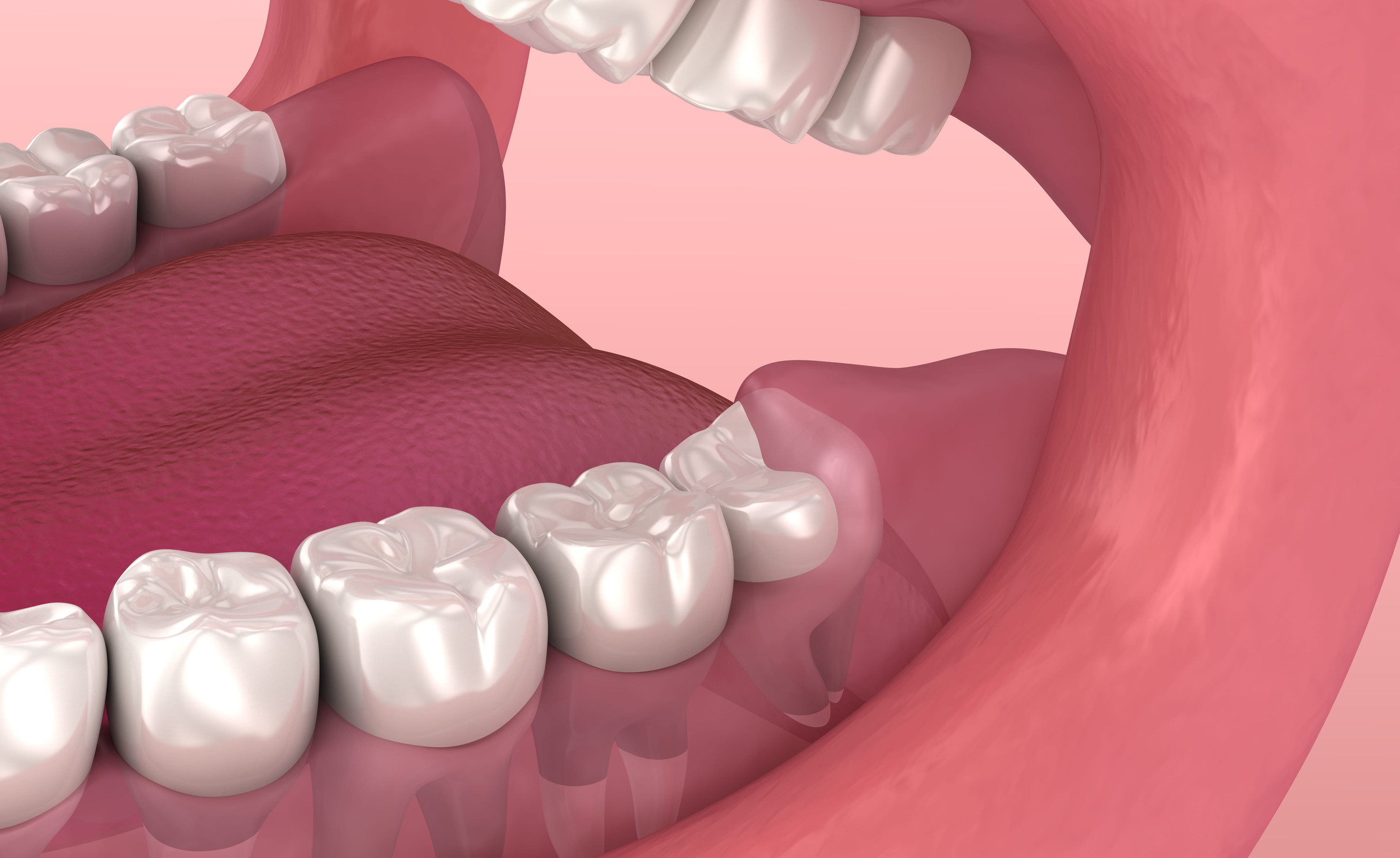
Completing an orthodontic journey is a major milestone. After months or even years of wearing traditional braces or clear aligners, removing appliances reveals a straight, beautiful, and fully functional smile. However, keeping those results intact requires ongoing vigilance—especially during late adolescence and early adulthood, when third molars, commonly known as wisdom teeth, begin to develop and attempt to erupt.
For many individuals, the jaw simply does not have sufficient space to accommodate these four extra teeth. When third molars fail to break through the gum line normally, they become impacted, remaining trapped beneath soft tissue or jawbone. While impacted wisdom teeth are frequently discussed in terms of localized pain, swelling, or infection, their long-term threat to post-orthodontic stability is equally critical. Left unmanaged, impacted third molars can exert structural pressure, disrupt arch alignment, and trigger complications that compromise years of orthodontic progress.
Understanding Impacted Wisdom Teeth
Wisdom teeth are the final set of permanent teeth to develop, typically attempting to erupt between the ages of 17 and 25. From an evolutionary perspective, human jaws were once larger and able to accommodate these extra molars. Modern human jaws, however, are frequently narrower, leaving third molars without adequate space to align properly.
An impacted wisdom tooth occurs when physical barriers—such as adjacent tooth roots or dense bone tissue—prevent the molar from reaching its normal position in the arch. Impacted third molars are generally classified by their orientation within the jawbone:
- Mesial Impaction: The tooth angles forward, pushing directly against the second molar. This is the most common form of impaction.
- Vertical Impaction: The tooth is oriented vertically but remains trapped beneath the gum line or bone tissue.
- Horizontal Impaction: The tooth lies horizontally within the jawbone, pointing directly at the roots of the adjacent molar.
- Distal Impaction: The tooth angles backward toward the rear of the jawbone.
Whether a tooth is completely buried beneath bone or partially erupted, impaction creates localized stress points within the dental arch. To learn more about diagnostic signs and surgical options, visit the practice's clinical hub for impacted wisdom teeth evaluation and treatment.
Mechanisms of Post-Orthodontic Relapse
The primary concern regarding untreated impacted wisdom teeth is their role in post-orthodontic dental shifting. While natural mesial drift (the continuous tendency of teeth to move forward over time) occurs naturally as people age, impacted third molars can exacerbate instability in several ways:
  Impacted Third Molar (Mesial Pressure)
                   │
                   ▼
  Second & First Molar Root Displacement
                   │
                   ▼
  Compromised Arch Length & Anterior Crowding
                   │
                   ▼
  Post-Orthodontic Relapse / Misalignment
1. Vector Pressure on Adjacent Molars
When a third molar grows at an angle, it exerts physical pressure against the roots and crown of the neighboring second molar. This constant forward force can shift second molars out of their precise positions. Because teeth exist in a continuous arch, displacing back molars alters how force distributes through the entire row, eventually contributing to crowding in the front incisors.
2. Disruption of Bite Relationship (Occlusion)
Orthodontic treatment does not merely straighten front teeth; it meticulously aligns the upper and lower teeth so they interlock correctly during chewing. An impacted wisdom tooth pushing against neighboring molars can cause subtle vertical or lateral shifts. If a molar tips or elevates, it creates premature contact points when biting, which forces the jaw to adjust its chewing path and disrupts overall bite alignment.
3. Compromised Retainer Fit
Post-orthodontic retention depends on consistent retainer use. Retainers are custom-molded to fit an exact dental arrangement. If an impacted wisdom tooth forces neighboring molars to shift even slightly, a clear retainer or wire may no longer sit flush against enamel. Once a retainer stops fitting properly, relapse accelerates quickly. Patients experiencing post-treatment movement can explore why teeth shift and what retreatment looks like to understand correction options.
Dental and Bone Complications Beyond Shifting
Beyond undoing aesthetic alignment, leaving impacted wisdom teeth untreated poses serious health risks to adjacent teeth and surrounding bone structures.
Second Molar Root Resorption
When a mesially or horizontally impacted wisdom tooth presses against the second molar root, the pressure can trigger osteoclasts to dissolve the second molar's outer root surface. Over time, this root resorption can irreversibly damage the tooth, making it loose or requiring root canal therapy or extraction.
Cysts and Bone Destruction
Every developing wisdom tooth forms inside a fluid-filled sac within the jawbone. If the tooth remains trapped, this sac can expand into a dentigerous cyst. As cysts expand, they destroy neighboring jawbone tissue and displace surrounding tooth roots, undoing precise orthodontic positioning and threatening jaw stability.
Timelines: When Should Wisdom Teeth Be Monitored?
Monitoring third molar development before complications arise is essential to long-term smile protection.
  AGE 7–10            AGE 12–15           AGE 16–19           AGE 20+
  Early Check-Up      Phase II Care       Wisdom Tooth        Ongoing Retainer
  and Tracking        & Arch Alignment    3D X-Rays           Use & Health Reviews
Early Screening and Tracking
The American Association of Orthodontists recommends that children receive an initial evaluation by age 7 to identify early growth patterns. While wisdom teeth do not erupt at this age, early 3D imaging helps orthodontists track dental development. Parents can read a comprehensive guide on early orthodontic evaluation for children to learn how early monitoring benefits long-term planning.
Adolescent Monitoring
During active adolescent treatment, panoramic X-rays monitor third molar root formation. Checking wisdom teeth position before removing braces allows orthodontists to coordinate extractions before teeth cause crowding or root damage. Teenagers can review our overview of what to expect from adolescent braces to understand how wisdom tooth monitoring fits into overall care.
Preventative Removal vs. Long-Term Retention
Orthodontists and oral surgeons evaluate wisdom teeth individually using digital imaging. Extraction is generally recommended when X-rays show:
- Lack of space for normal eruption.
- An angled growth path directed toward adjacent tooth roots.
- Recurrent gum inflammation or difficulty maintaining hygiene.
- Cyst development or signs of second molar root damage.
Removing impacted wisdom teeth during late adolescence or early adulthood—when tooth roots are only partially developed and surrounding bone is less dense—offers faster healing and minimizes surgical risks.
However, extracting wisdom teeth is not a substitute for wearing retainers. Natural aging, muscle pressure, and ligament memory cause subtle tooth movement throughout life. While removing impacted wisdom teeth eliminates forward vector pressure, consistent retainer compliance remains the ultimate protection against orthodontic relapse.
Protecting Your Investment
Achieving a healthy, aligned smile requires an investment of time, effort, and financial resources. Leaving impacted wisdom teeth unmonitored risks causing avoidable structural shifts, dental decay, and root damage.
By maintaining routine post-treatment check-ups, obtaining regular panoramic imaging, and following custom retention guidelines, patients can protect their orthodontic results and enjoy a stable, healthy smile for life.

-1.svg)

