
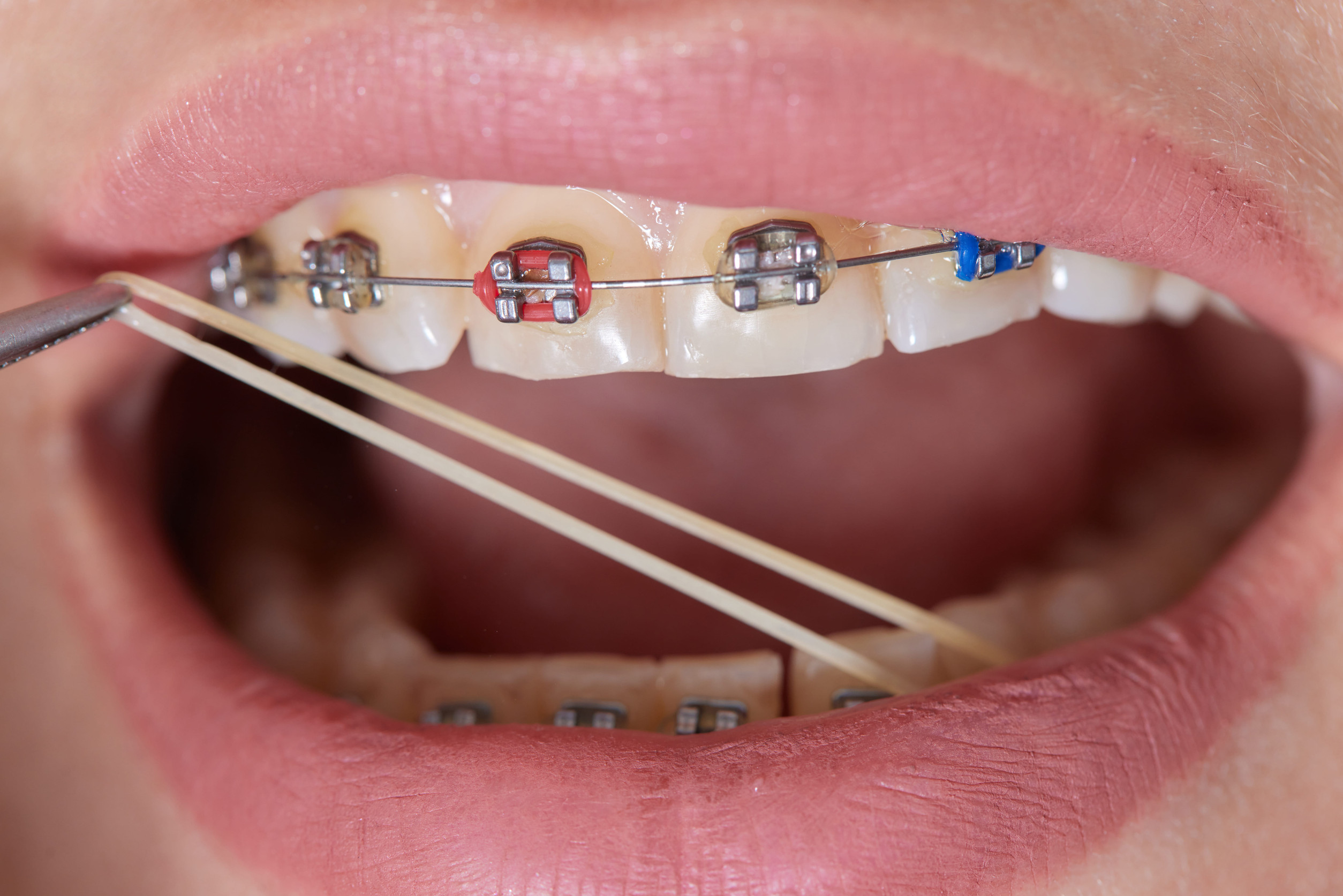
Orthodontic treatment relies on fundamental physics: for every force applied to move a tooth, an equal and opposite reactive force is created elsewhere in the mouth. Traditionally, orthodontists have anchored braces or aligners against neighboring teeth or used external headgear to achieve difficult tooth movements. However, relying on surrounding teeth as anchors can lead to unwanted displacement of those anchor teeth—a phenomenon known as loss of anchorage.
Enter Temporary Anchorage Devices (TADs). These small, biocompatible titanium pins have revolutionized modern biomechanics. By anchoring directly into the surrounding jawbone, TADs provide a fixed, immobile anchor point. This allows orthodontists to execute complex 3D movements with incredible precision, often eliminating the need for jaw surgery or tooth extractions while significantly accelerating overall treatment time.
The Physics of Anchorage: Newton's Third Law in Your Mouth
To appreciate why TADs are a game-changer, it helps to understand traditional orthodontic anchorage. According to Newton’s Third Law of Motion, every action has an equal and opposite reaction.
In a traditional setup, if an orthodontist tries to pull a prominent canine tooth backward using a back molar as an anchor, two things happen simultaneously: the canine moves backward toward the molar, but the molar also slides forward toward the canine. When the primary goal is strictly to push front teeth back without pulling back teeth forward, traditional approaches require cumbersome appliances, headgear, or strict elastic compliance.
TADs solve this dilemma entirely. Because a TAD is anchored directly into cortical jawbone rather than suspended in a tooth socket, it offers absolute resistance. It does not budge, ensuring that 100% of the orthodontic force is directed exclusively at the teeth meant to move. To better understand how force mechanics shift individual roots through bone, explore the science behind how braces and aligners move teeth.
What Exactly Is a TAD? Design and Anatomy
A Temporary Anchorage Device is a miniature screw made of medical-grade titanium alloy—the same bio-inert material used in orthopedic joint replacements and permanent dental implants. However, unlike permanent implants, TADs do not fuse permanently to the bone tissue (a process called osseointegration). Instead, they are held securely in place by mechanical retention within the dense outer layer of bone (cortical bone). This allows them to be removed cleanly, easily, and painlessly when treatment is finished.
A typical TAD consists of three distinct functional parts:
- The Head: Exposed just above the gum line, the head features small notches, grooves, or buttons where springs, rubber bands, or archwires can be attached.
- The Smooth Collar: The transitional midsection that sits snugly against the gingiva (gum line) to prevent irritation and allow surrounding soft tissue to stay healthy.
- The Threaded Body: Precision titanium threads ranging from 6mm to 12mm in length that thread into the cortical bone to deliver immediate mechanical stability.
The Placement Process: Fast and Virtually Painless
Patients often feel apprehensive when they hear the word "screw," but the placement procedure is remarkably simple and minimally invasive.
First, the orthodontist applies a topical numbing gel followed by a tiny local anesthetic injection to the target gum area. Next, using specialized precision tools, the doctor gently drives the self-tapping mini-screw through the gum tissue and into the bone. The entire placement process takes less than two minutes.
Because the device relies on immediate mechanical stability rather than months of bone fusion, elastic chains, coil springs, or wires can often be connected to the TAD on the exact same day. Patients typically report feeling mild pressure during placement, but no sharp pain. Any mild post-procedure soreness is easily managed with over-the-counter pain relievers for 24 to 48 hours.
How TADs Speed Up Tooth Movement and Shorten Timelines
The primary reason orthodontists utilize TADs is efficiency. By providing an unyielding anchor point, TADs streamline treatment in several key ways:
Eliminating Unwanted Tooth Movements
In traditional treatment without absolute anchorage, teeth often move slightly in the wrong direction before being corrected (a process known as round-tripping). TADs eliminate this wasted motion by pulling teeth directly along a pre-calculated path from day one.
Delivering Continuous 24/7 Force
Traditional anchorage devices like headgear or rubber bands depend heavily on patient compliance. If a patient forgets to wear their elastics for a few days, progress stalls or reverses. TADs, connected with tiny nickel-titanium springs, deliver low, continuous force 24 hours a day without requiring patient intervention. Avoiding compliance pitfalls is a huge win for overall efficiency; for more tips on staying on track, check out the most common clear aligner mistakes and how to avoid them.
Enabling Simultaneous Movements
Without TADs, orthodontists often have to move teeth sequentially—for example, moving canines back first, and then pulling the front four incisors back later. A TAD provides enough anchor strength to retract all six front teeth simultaneously (en-masse retraction), cutting months off the overall timeline.
Correcting Complex Bite Issues Without Surgery
TADs can intrude (push up) over-erupted molars, fix severe open bites, and correct significant facial asymmetry that previously required invasive jaw surgery (orthognathic surgery). Avoiding surgical recovery significantly shortens the total path to a finished smile.
Common Clinical Applications for TADs
TADs are incredibly versatile tools that can be incorporated into both fixed bracket systems and clear aligner therapies.
Correcting Gummy Smiles and Open Bites
When a patient displays excessive gum tissue when smiling, or when back molars prevent front teeth from touching (an anterior open bite), TADs offer a non-surgical solution. By anchoring a TAD in the upper jawbone above the roots, the orthodontist can apply upward vertical force to push entire segments of teeth into the bone, dramatically improving both bite function and smile aesthetics.
Molar Uprighting and Space Closure
If a lower molar has been missing for a long time, the molar behind it often tips forward into the empty space, making it impossible to place a replacement dental implant. A single TAD can pull the tipped molar back into an upright position. Alternatively, TADs can pull adjacent teeth forward to permanently close giant gaps from missing teeth, eliminating the need for an implant altogether.
Enhancing Clear Aligner Performance
While clear aligners excel at many movements, vertical movements (like extrusion or intrusion) and complex root torque can be challenging with plastic alone. Integrating TADs with clear aligners allows orthodontists to tackle severe bite discrepancies while keeping the aesthetic benefits of aligners intact. Discover how these appliances integrate by exploring our overview of what to expect from clear aligners.
Caring for Your TAD: Hygiene and Maintenance
Because a TAD sits partially exposed through the gum tissue, maintaining excellent oral hygiene around the device is essential. Tissue inflammation around the pin can cause the surrounding bone to soften, leading to premature loosening of the mini-screw.
To care for a TAD daily:
- Brush Gently: Clean carefully around the head of the TAD using a soft-bristled toothbrush after every meal.
- Use an Antiseptic Swab: Dip a cotton swab in an antiseptic mouthwash or warm salt water and gently wipe around the collar of the TAD to prevent plaque buildup.
- Avoid Disruption: Do not pick at, poke, or play with the TAD using your tongue, fingers, or hard objects.
If food particles accumulate around a TAD, the surrounding gum tissue can swell and cover the screw head. Diligent daily cleaning keeps the tissue healthy, firm, and comfortable. For broader maintenance guidance during treatment, review our guide on clear aligner cleaning, storage, and care practices.
Age Considerations: Who Is a Candidate for TADs?
Because TADs depend on dense cortical bone for stability, patient age and bone maturity play a role in planning.
Teenage Patients
While teenagers are excellent candidates for orthodontics, their facial bone is still actively growing and less dense than adult bone. Orthodontists carefully evaluate 3D imaging before placing TADs in growing adolescents to ensure the bone layer is thick enough to hold the screw securely. When suitable, TADs can dramatically accelerate adolescent treatment. Learn more about adolescent treatment options in our guide to understanding braces for teens.
Adult Patients
Adults are prime candidates for TADs. Because adult skeletal structures are fully developed and jaw growth has stopped, adult bone provides dense, highly stable support for mini-screws. Furthermore, because adults are more likely to have missing teeth, worn enamel, or pre-existing restorations, TADs give orthodontists the absolute anchorage needed to solve complex biomechanical puzzles without relying on compromised anchor teeth.
Removal and Recovery
Once the desired tooth movements are complete, removing the TAD is even faster and easier than placing it.
No local anesthetic injection is usually required, as the bone tissue surrounding the screw contains very few pain receptors. The orthodontist simply uses a specialized driver instrument to unthread the mini-screw in a matter of seconds. Patients feel a light unthreading pressure, but no pain. The tiny microscopic site left in the gum tissue heals completely within 48 to 72 hours, leaving no scar or permanent mark behind.
Summary: Small Device, Massive Impact
Temporary Anchorage Devices represent one of the most significant advancements in modern orthodontic engineering. By providing an immovable point of leverage directly within the jawbone, TADs eliminate non-target tooth movement, overcome heavy compliance hurdles, shorten total treatment times, and make complex, non-surgical smile transformations possible.
If your orthodontist recommends a TAD as part of your custom treatment plan, you can rest assured that this tiny, high-tech device is working behind the scenes to deliver your ideal smile faster, more comfortably, and with maximum precision.

-1.svg)

